Historical context
The Achaemenid Empire was the first state in history to govern a continental expanse of diverse peoples as a single durable political order. It was founded in the mid-sixth century BCE by Cyrus the Great, who united the Persians and Medes and absorbed in turn the Lydian kingdom and the Babylonian Empire; it was extended to the Indus and into Europe and then organised into a working system by Darius I; and it lasted, as the dominant power of the ancient Near East, until Alexander of Macedon overthrew it between 334 and 330 BCE. For two centuries it ruled an area that no previous empire had approached, and it did so not by perpetual conquest but by administration. The platform reads the Achaemenid Empire as the ancient world's founding case of empire as a system — the durable counterpoint to the Greek civic experiment and the model that every later empire of the region inherited.
Political structure
At the apex stood the King of Kings (xšāyaθiya xšāyaθiyānām), an absolute monarch whose authority was grounded in the favour of the god Ahuramazda and exercised over the peoples (dahyāva) of the empire. But Achaemenid monarchy was not the rule of a single will over an undifferentiated mass. The king ruled through, and in some sense over, the preserved political and legal orders of the many peoples he governed — Babylonian, Egyptian, Lydian, Ionian, Judaean and the rest — each of which retained its own institutions beneath the imperial layer. The platform reads this under kingship and legitimacy: the Achaemenid king was legitimate not merely as conqueror but as the restorer and guarantor of each people's own order.
Administrative structure
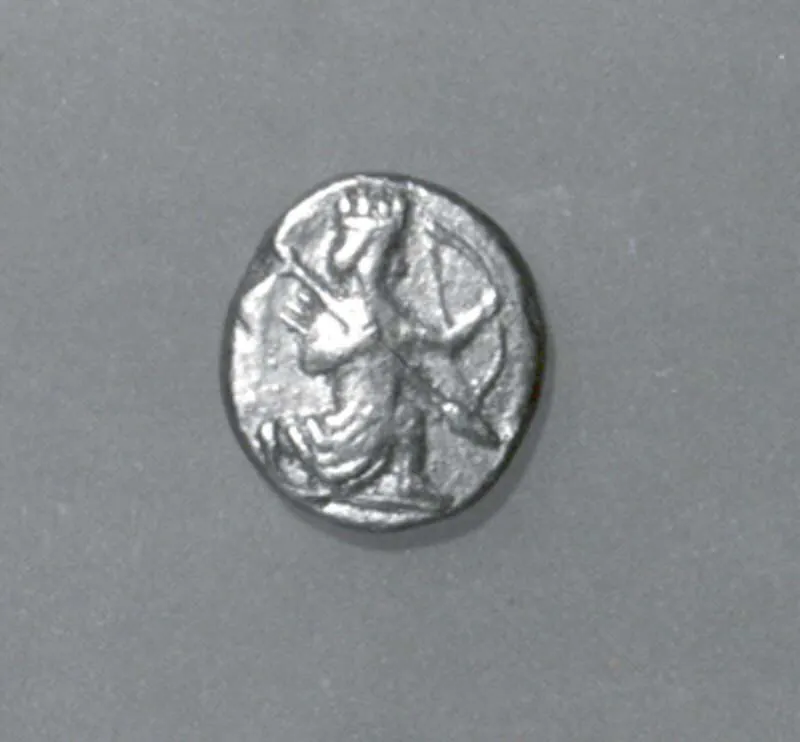
The administrative core was the satrapy — the large provincial governorship, about twenty in number under Darius, each under a royal-appointee satrap whose power was checked by a separate military commander, a royal secretary, and touring inspectors (the king's "eyes and ears"). Fixed tribute assessments defined what each province owed; the gold daric and silver siglos gave the empire a common high-value coinage; and a multilingual chancery, using Aramaic as a common administrative script alongside Elamite and Old Persian, let a single order be understood across the empire. The platform reads this under governance at scale and imperial administration as the first standing imperial bureaucracy.
Military organisation
The Achaemenid army was the instrument of imperial maintenance more than of permanent conquest. At its core stood the standing royal forces — the ten thousand "Immortals," kept permanently at full strength by replacement — supplemented by satrapal levies that could be raised across the empire and by the best cavalry and archers of the subject peoples. Its campaigning logistics, supported by the road network and prepared depots, were the most sophisticated in the ancient world before Rome. The empire's failures — the Scythian campaign, the invasions of Greece — came at its frontiers, where the satrapal model met peoples and geographies it could not absorb, not at its administered core.
Roads and communication
The empire's coherence depended on its Royal Road and the relay-post system that ran along it, carrying the king's messages between Sardis and Susa in days rather than the months an ordinary journey took. The platform reads this under imperial communication: the speed at which information and authority could travel set the reach of the king's control, and the Persian system — couriers, a common chancery language, and broadcast inscriptions like Behistun dispatched across the provinces — was the nervous system that made the whole body governable.
Relationship to local peoples
The defining Achaemenid policy was rule through accommodation rather than assimilation. The Cyrus Cylinder states the method: local cults restored, displaced peoples returned home, local law and custom left intact. The biblical record of the Judaean return preserves the same policy from the subject side. The platform reads this under empire and diversity: the Achaemenids discovered that a multi-ethnic empire is more cheaply and durably held by binding subjects in through their own institutions than by forcing uniformity — the opposite of the assimilating current that would run through Rome.
Religion and governance
The king ruled by the favour of Ahuramazda and as the upholder of arta (right order) against drauga (the Lie). This was not a state church imposed on subjects — local gods were honoured, and the king could present himself as Marduk's choice in Babylon as readily as Ahuramazda's on the Iranian plateau — but a royal ideology that made the king the guarantor of cosmic and political order everywhere. The platform reads this under sacred kingship: religion legitimated the throne without being weaponised against the diversity the empire depended on.
Architecture and symbolism
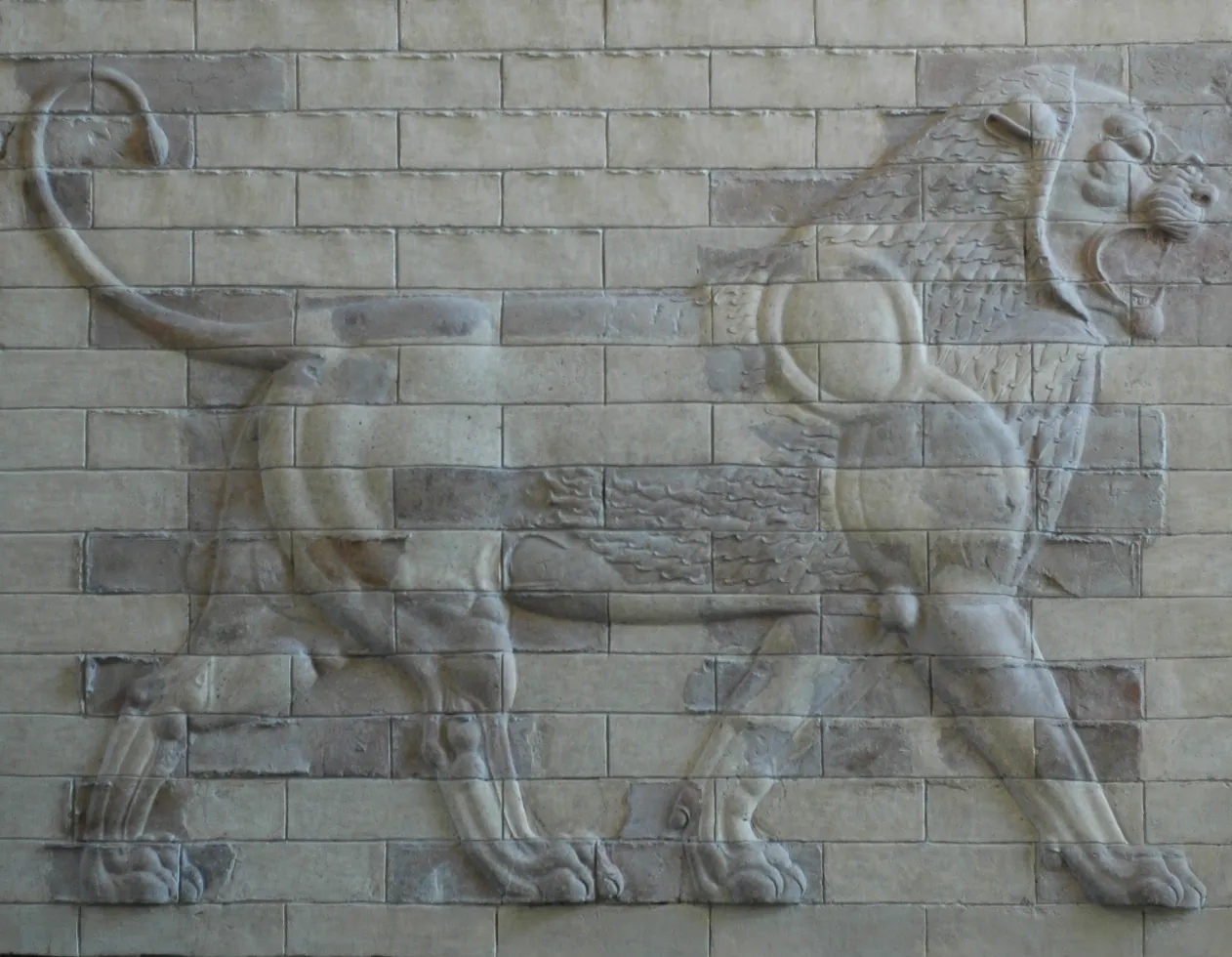
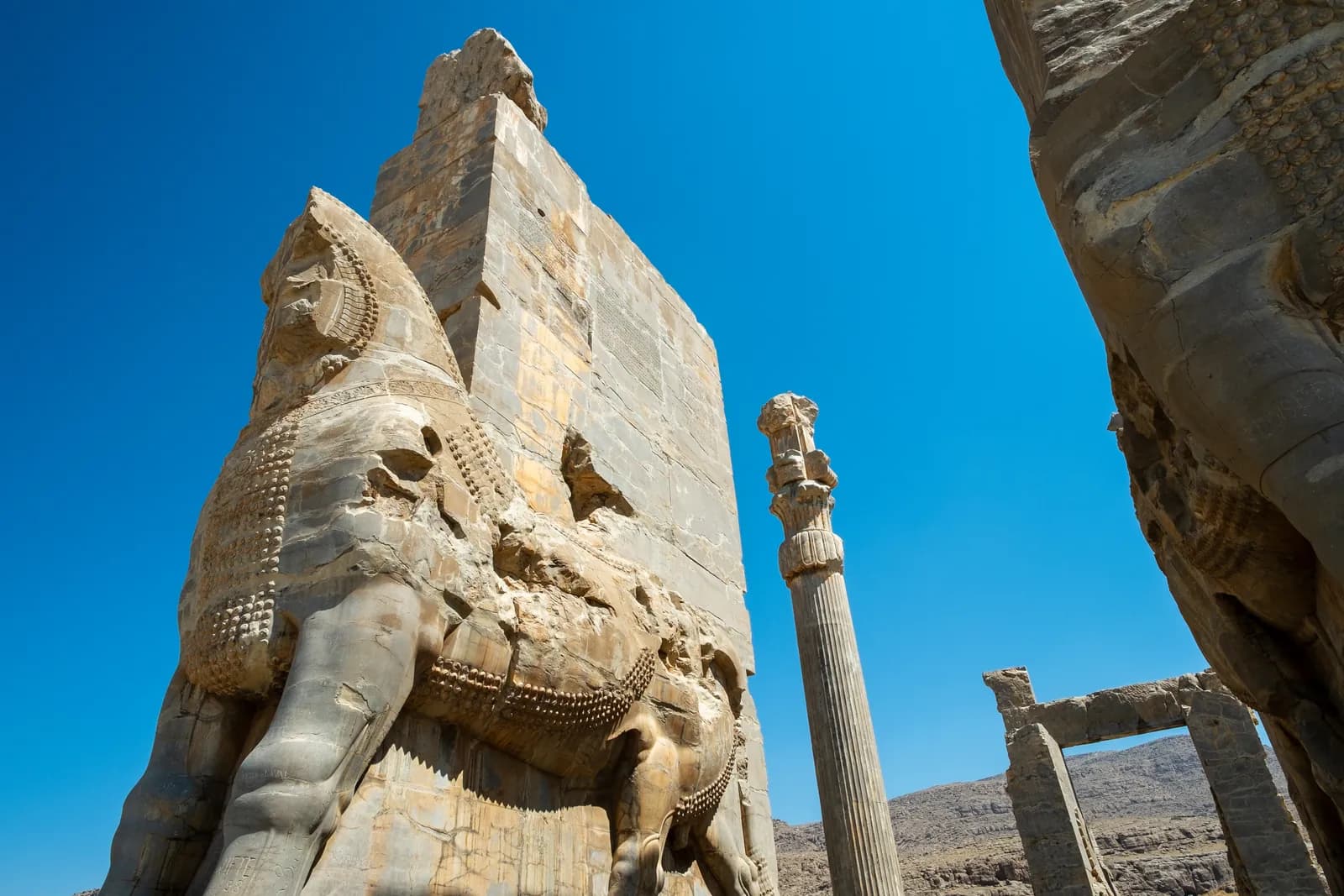
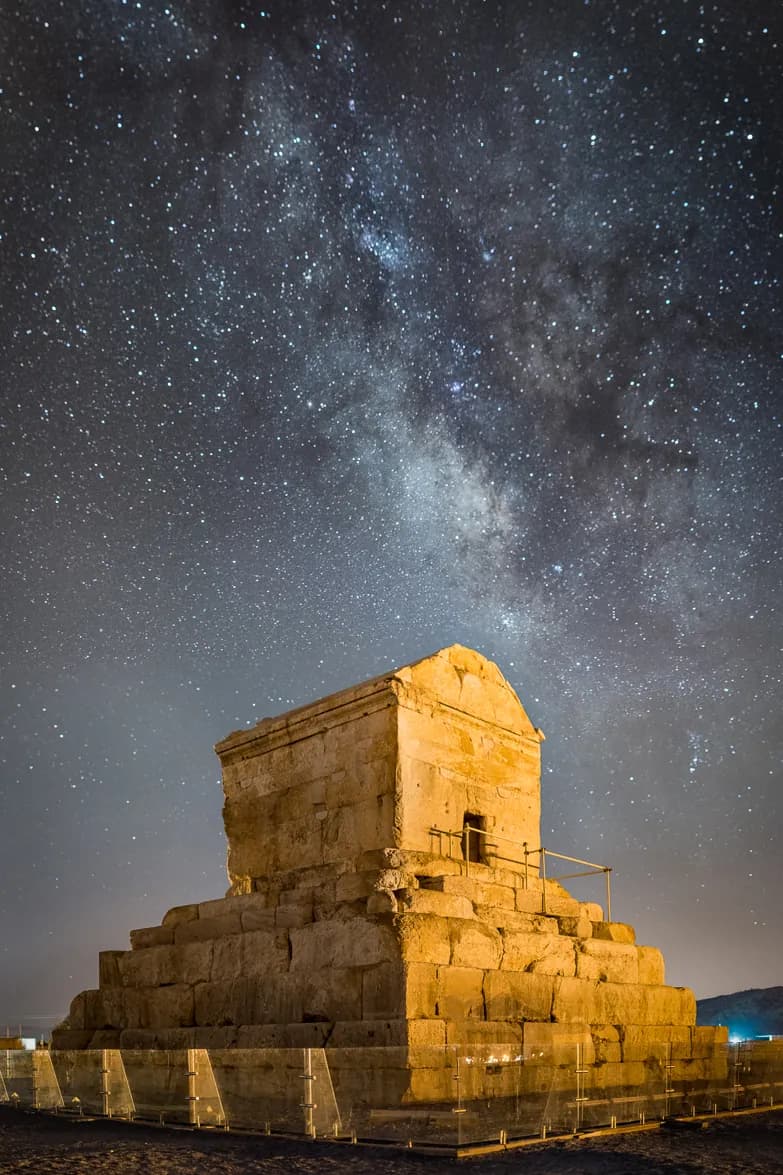
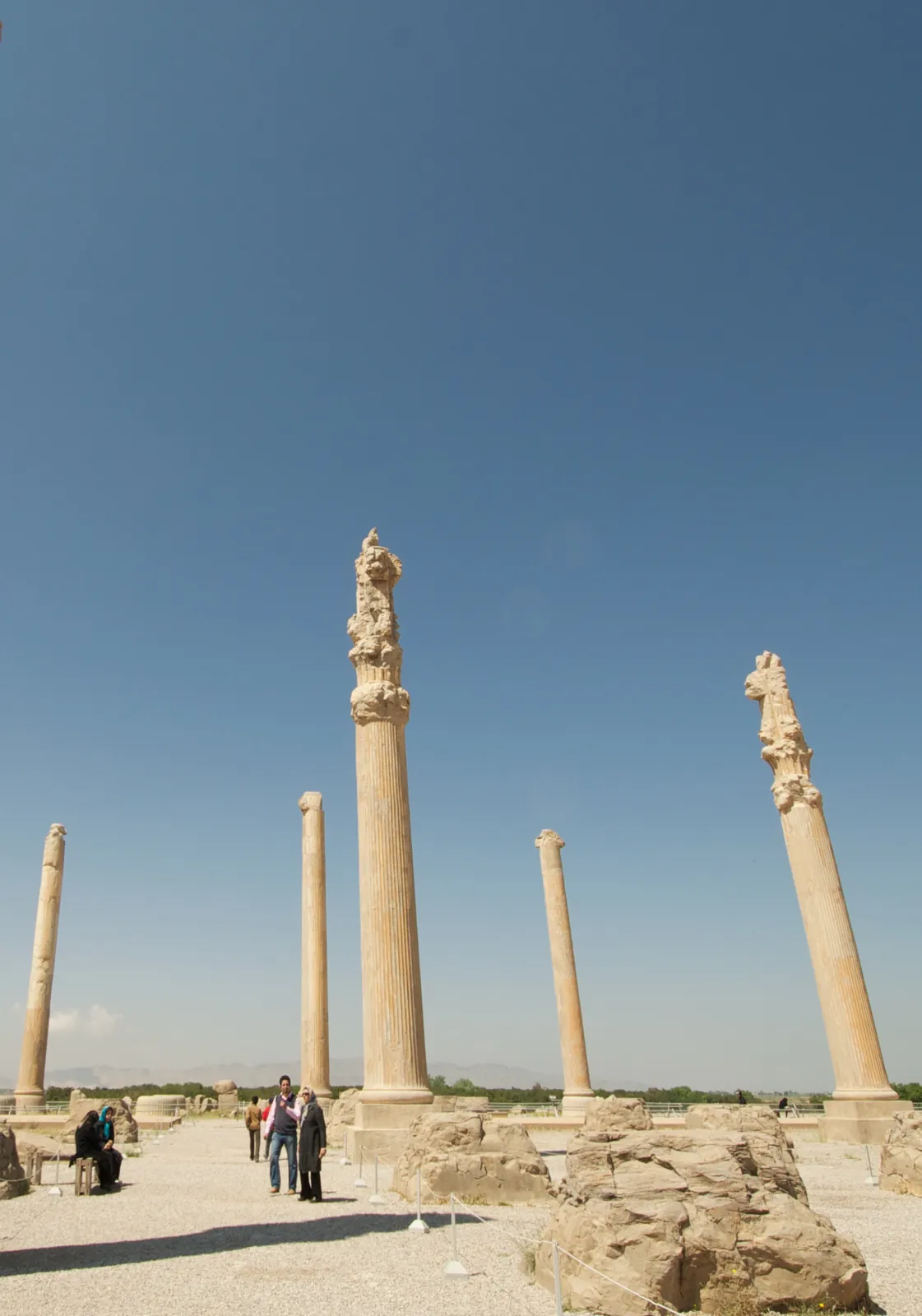
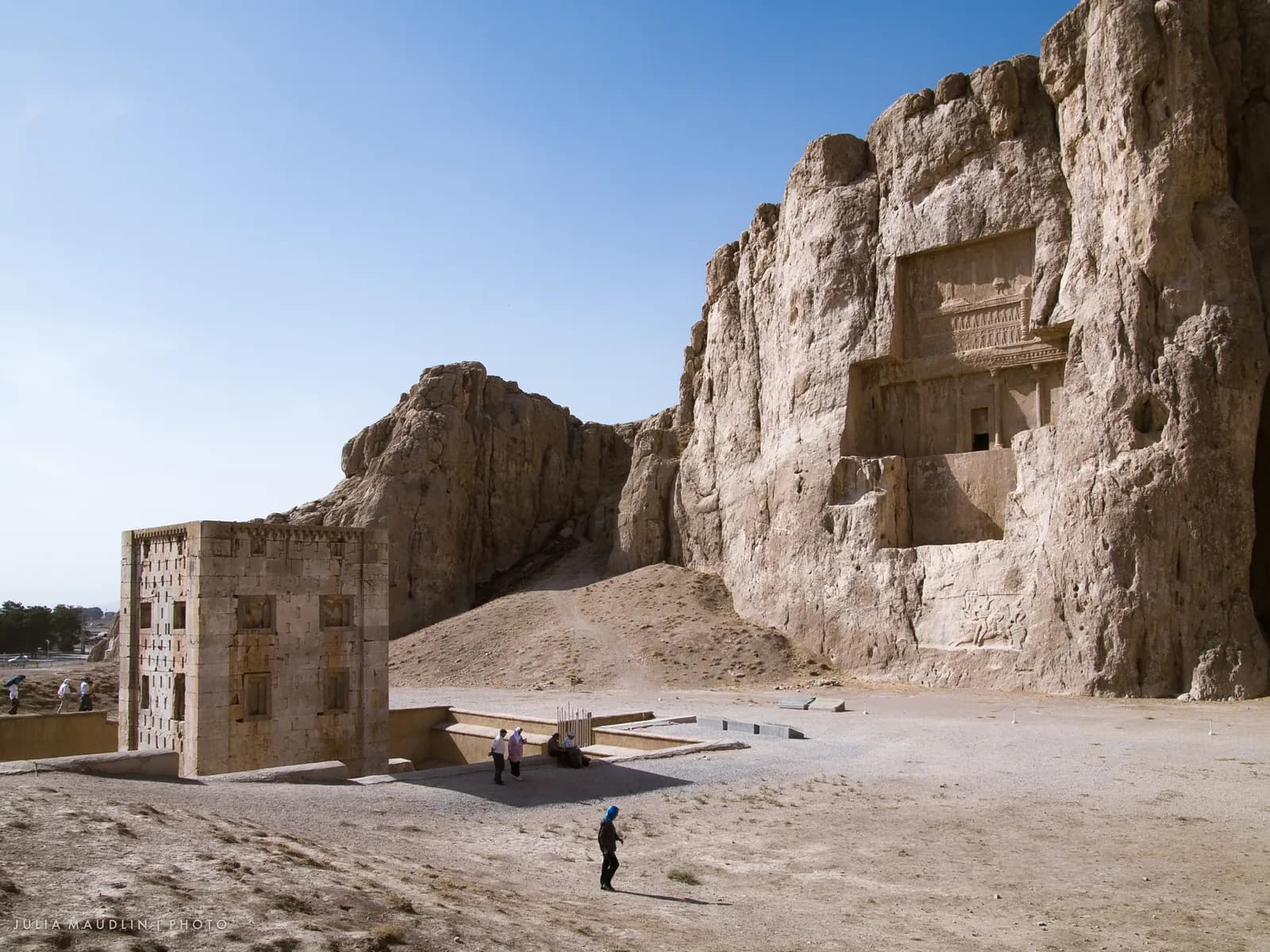
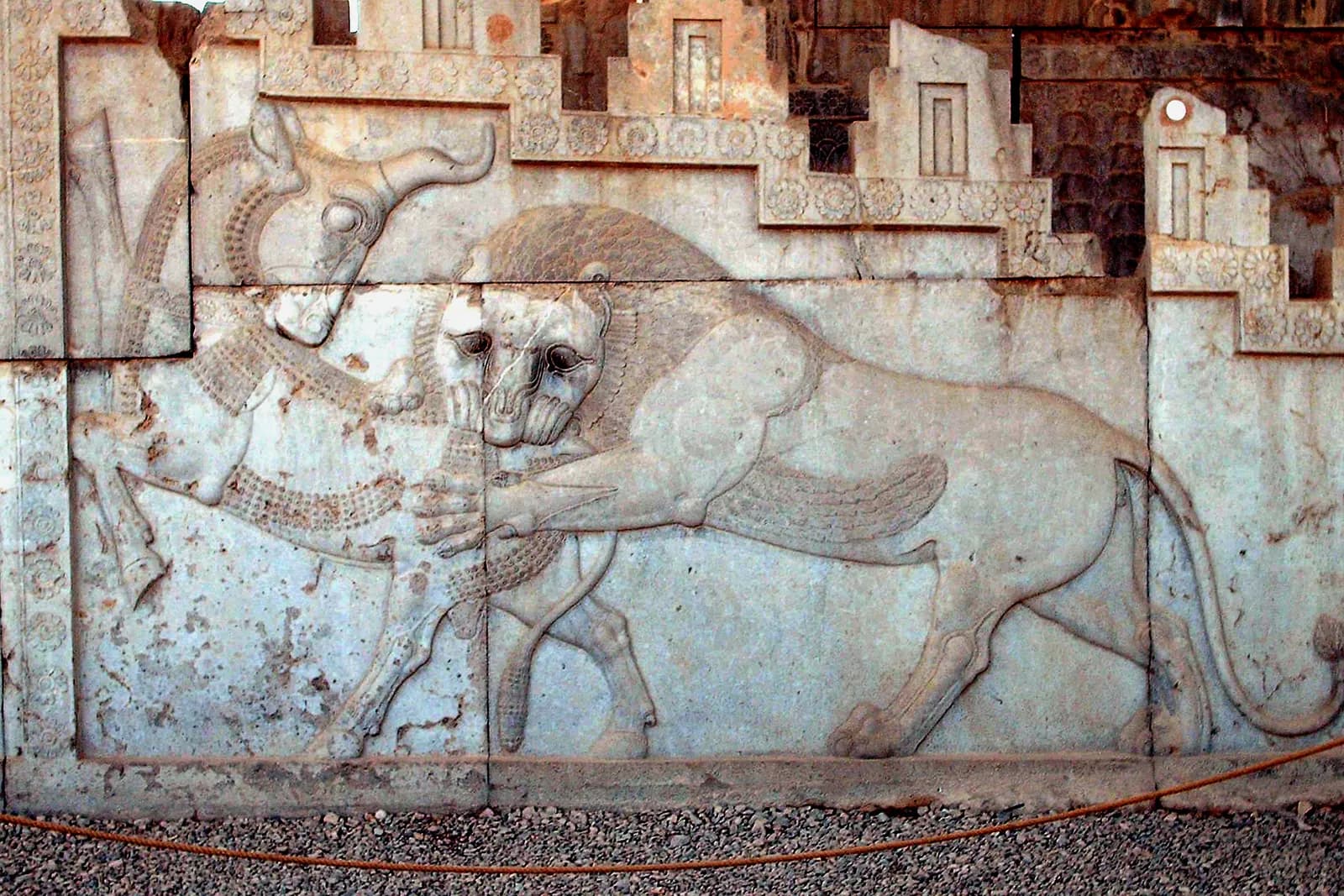
The Achaemenid building programme — Pasargadae under Cyrus, Susa under Darius, and above all Persepolis under Darius and Xerxes — fused Median, Elamite, Babylonian, Egyptian and Ionian elements into a deliberately imperial style that visually enacted the empire's unity-in-diversity. The Apadana audience hall, its eastern stairway carved with twenty-three delegations of subject peoples bringing tribute to the king, is the single most considered visual statement of the Achaemenid order; the Gate of All Nations, the royal tombs at Naqsh-e Rustam, and the multilingual building inscriptions complete the programme. The architecture is the ideology in stone.
Decline and transformation
The empire ended quickly under external pressure. Alexander's invasion reached and burned Persepolis by 330 BCE; Darius III was murdered by his own satrap; the dynasty fell. But the form did not end. Alexander adopted the Achaemenid administrative system almost unchanged; his Seleucid successors ran it for a century and a half; and the Parthian and Sasanian empires that followed inherited and elaborated the imperial structure, the Iranian religious tradition, and the architectural vocabulary. The Achaemenid order transformed rather than vanished, and Iranian imperial continuity runs through it into late antiquity and beyond.
Why this civilization matters
The platform reads the Achaemenid Empire because it solved, first and durably, the problem every large state since has faced: how to govern more territory and more peoples than any centre can oversee directly. Its answer — provincial administration, tolerated local order, roads and communication, legitimacy grounded in restoration — is the template of empire itself. Greece defined its civic freedom against this order; Rome would later solve the same problem by different means; and the European tradition's most admiring portrait of a ruler, Xenophon's Cyrus, takes an Achaemenid king as its subject. Persia is not a footnote to the classical world but one of its three load-bearing pillars.