How the civilization read itself
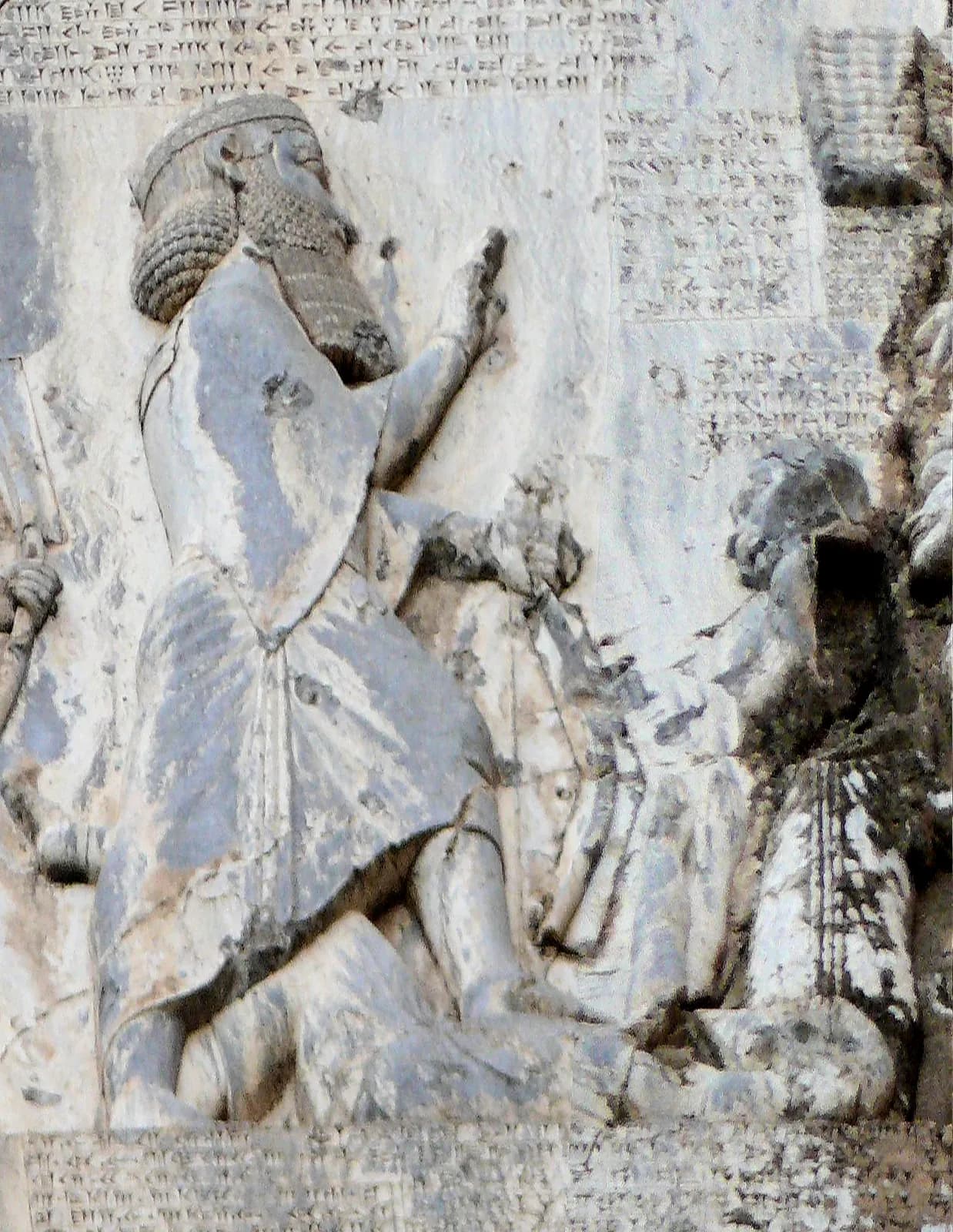
The Achaemenid Persian world-empire is the case the European tradition has had the most difficulty reading of the great ancient civilizations. The principal surviving narratives of it are Greek — Herodotus, Xenophon, Ctesias, Plutarch — written by men whose own civic life was defined in part by its contrast with the Persian one. The Persian sources are royal inscriptions (Cyrus's cylinder, Darius's Behistun inscription, the building inscriptions at Persepolis and Susa) and administrative archives (the Persepolis Fortification and Treasury tablets, in Elamite cuneiform). Together they give us a partial picture; the missing third — what an Achaemenid would have said about the Achaemenid order — survives in trace.
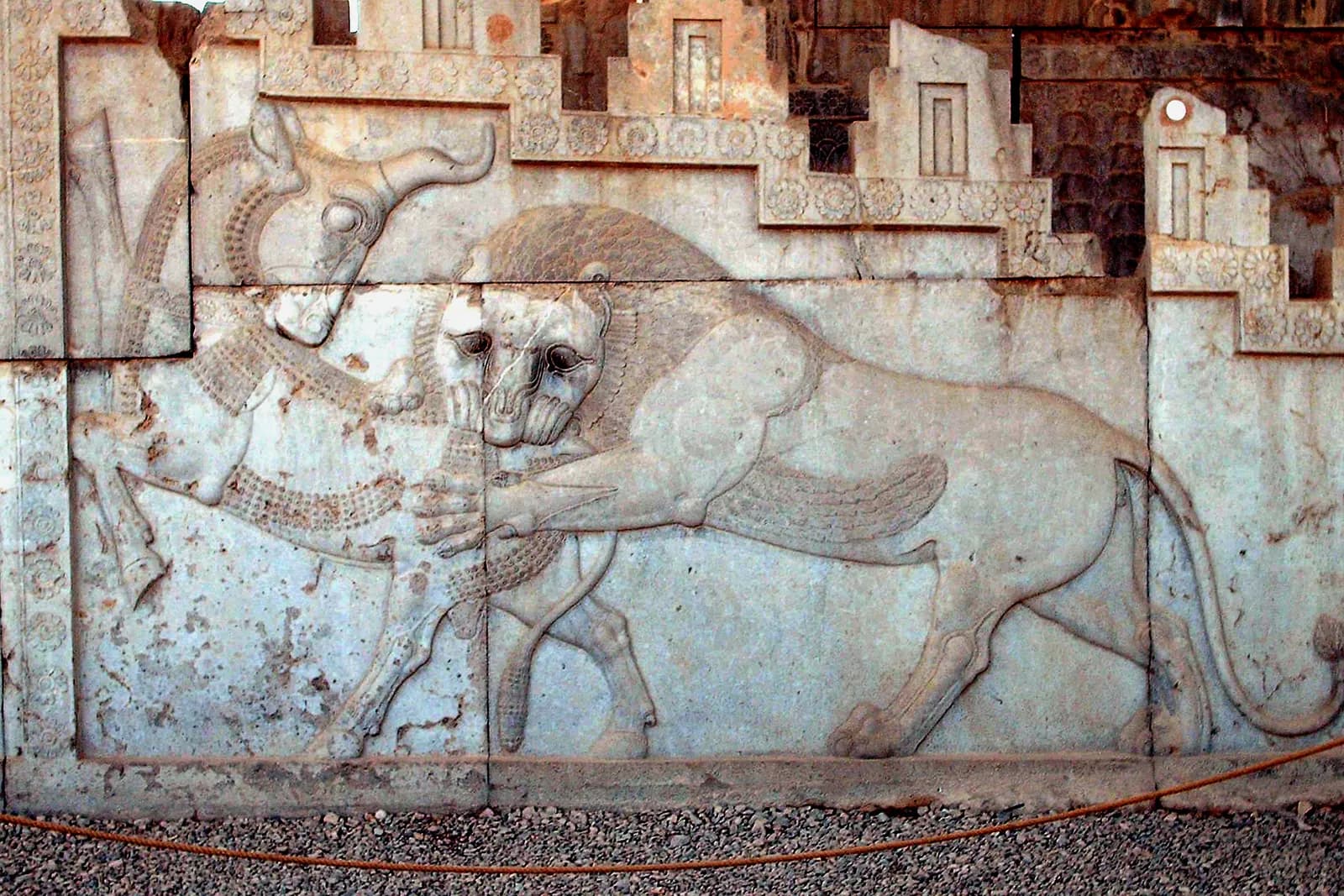
What the trace shows is a self-conception organised around the King of Kings (Old Persian xšāyaθiya xšāyaθiyānām), the Wise-Lord Ahuramazda whose favour grounded the king's authority, and the peoples (dahyāva) that the king kept in their proper relation to one another. The Apadana relief at Persepolis is the surviving visual statement of the order — twenty-three delegations of subject peoples (Medes, Elamites, Babylonians, Lydians, Egyptians, Scythians, Indians and others) ascending the stairway in registers toward the Great King. The form is not "conquest" in the Roman triumphal sense; it is acceptance of the king's order in exchange for the king's peace and justice (šiyāti, arta).
Political structure
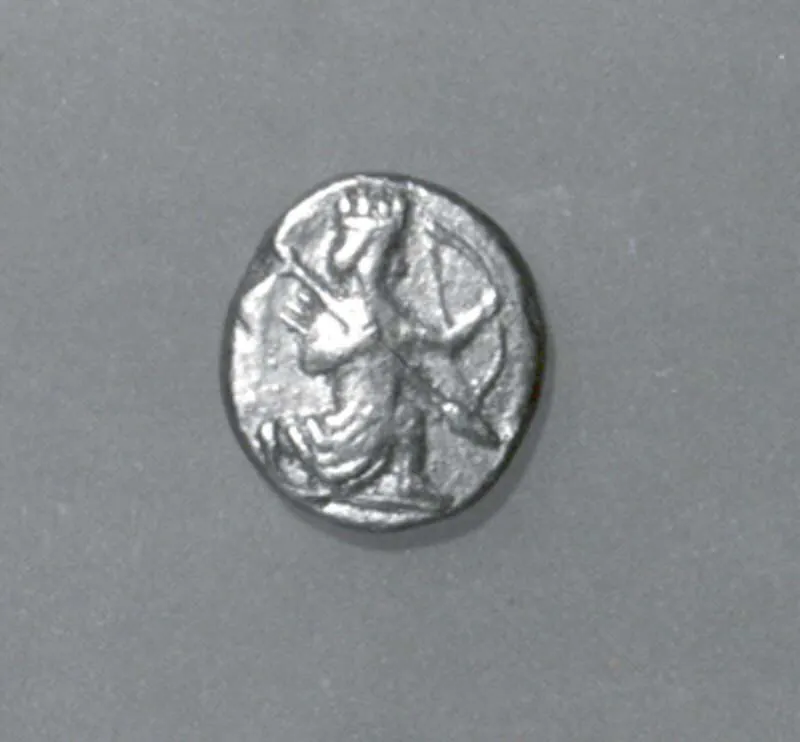
The Achaemenid state was the first ancient empire to administer a continental-scale territory through a working bureaucratic apparatus. The empire was divided into satrapies — about twenty under Darius I — each governed by a satrap who was a royal appointee, supplemented by a separate military commander and a royal secretary whose duties overlapped to limit any one official's autonomy. The Royal Road from Sardis to Susa (2,700 km), the standardised system of relays for the imperial post (Herodotus's angareion), the gold daric coinage and the standardised tribute assessments held the network together.
The administrative practice was unusual for the ancient world in its tolerance of local custom — local laws, local religious practice, local administrative languages were preserved within the imperial framework. Cyrus's restoration of the Babylonian Marduk cult and of the Jews to Jerusalem (Isaiah 45; Ezra 1) is the founding case; the Aramaic-language imperial chancery script that united the western satrapies is the working linguistic form. The empire ran on the principle that local order, where compatible with the king's authority and his tribute, was the king's own order.
Military structure
The Achaemenid army was the working instrument of imperial maintenance rather than of permanent conquest. The standing royal forces — the Immortals, ten thousand elite infantry kept at full strength by replacement — and the satrapal levies that could be raised across the empire produced a force whose campaigning logistics (the king's road network, the provisioning depots, the canal across the Athos peninsula prepared for Xerxes's 480 BCE invasion of Greece) were the most sophisticated of the ancient world before Rome. The Greek victories at Marathon, Salamis and Plataea are not the verdict on this army that the later Greek tradition treated them as; they are the verdict on the specific Persian projection of force across the Aegean against a hostile alliance fighting on its home ground.
What the army was not, structurally, was a permanent army of conquest in the Roman sense. The Achaemenids built a stable imperial order across continental Asia and did not attempt to keep pushing outward indefinitely. The collapse came under external pressure (Alexander's invasion, 334–330 BCE) at the end of a long stable two-century reign.
Architectural identity
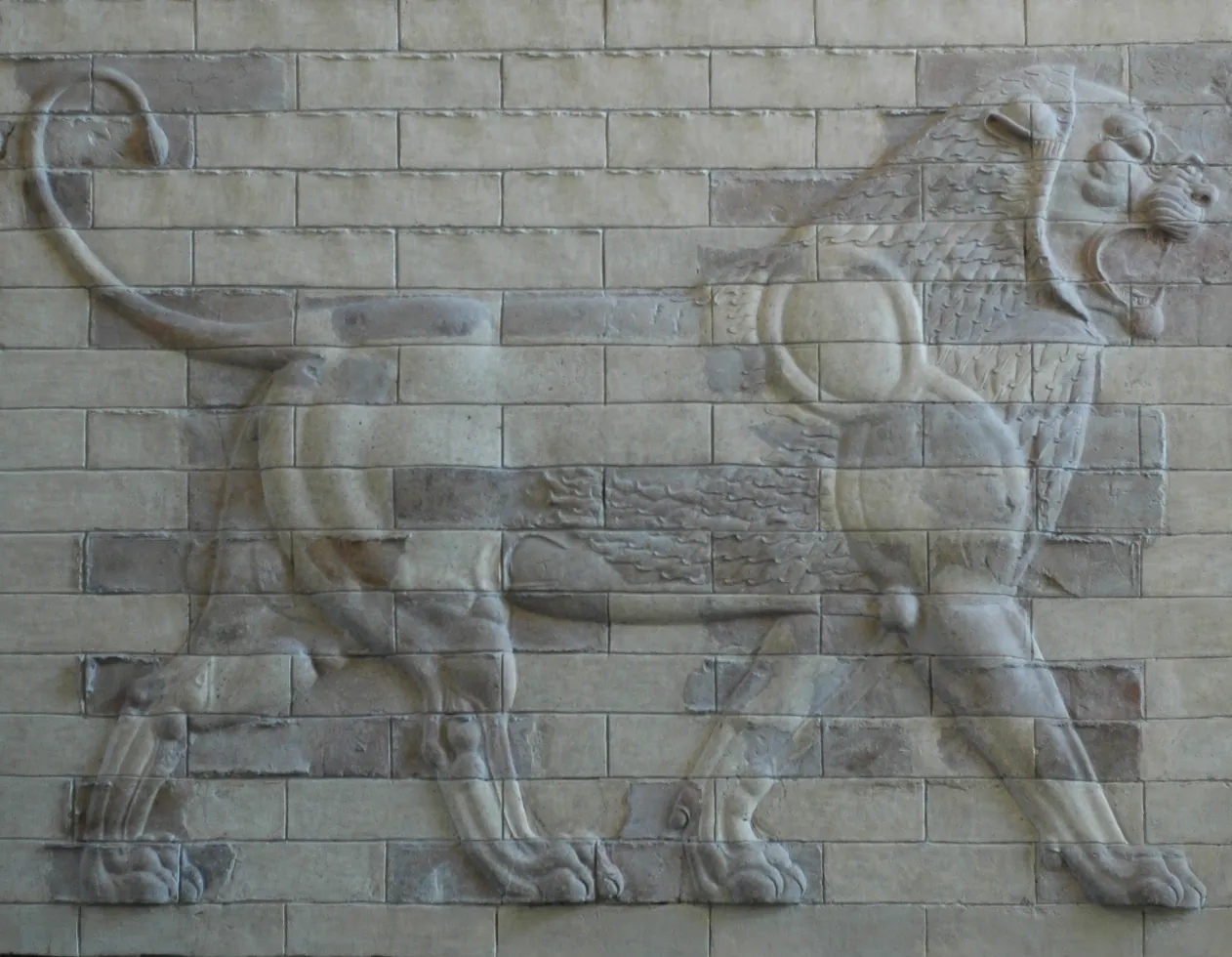
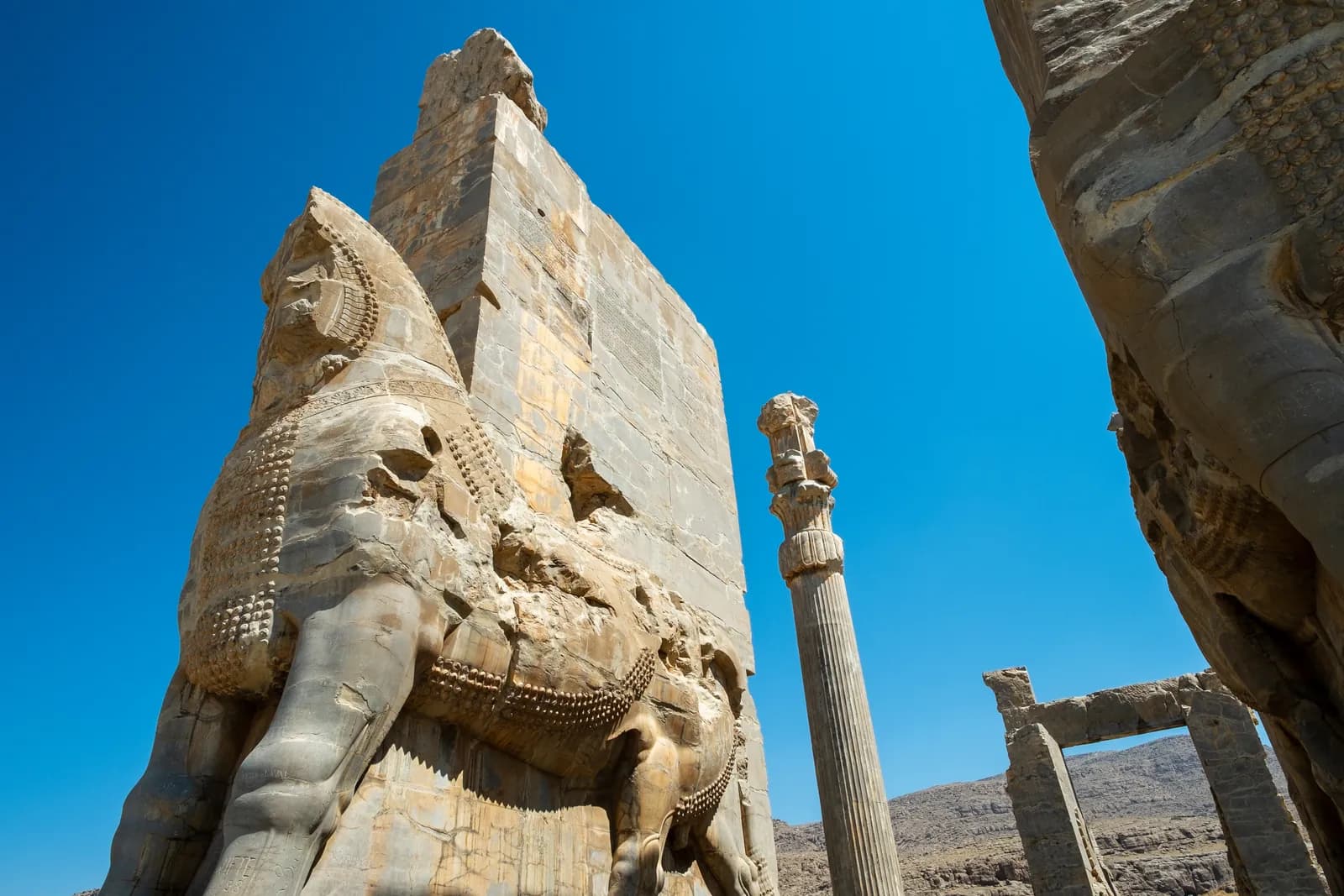
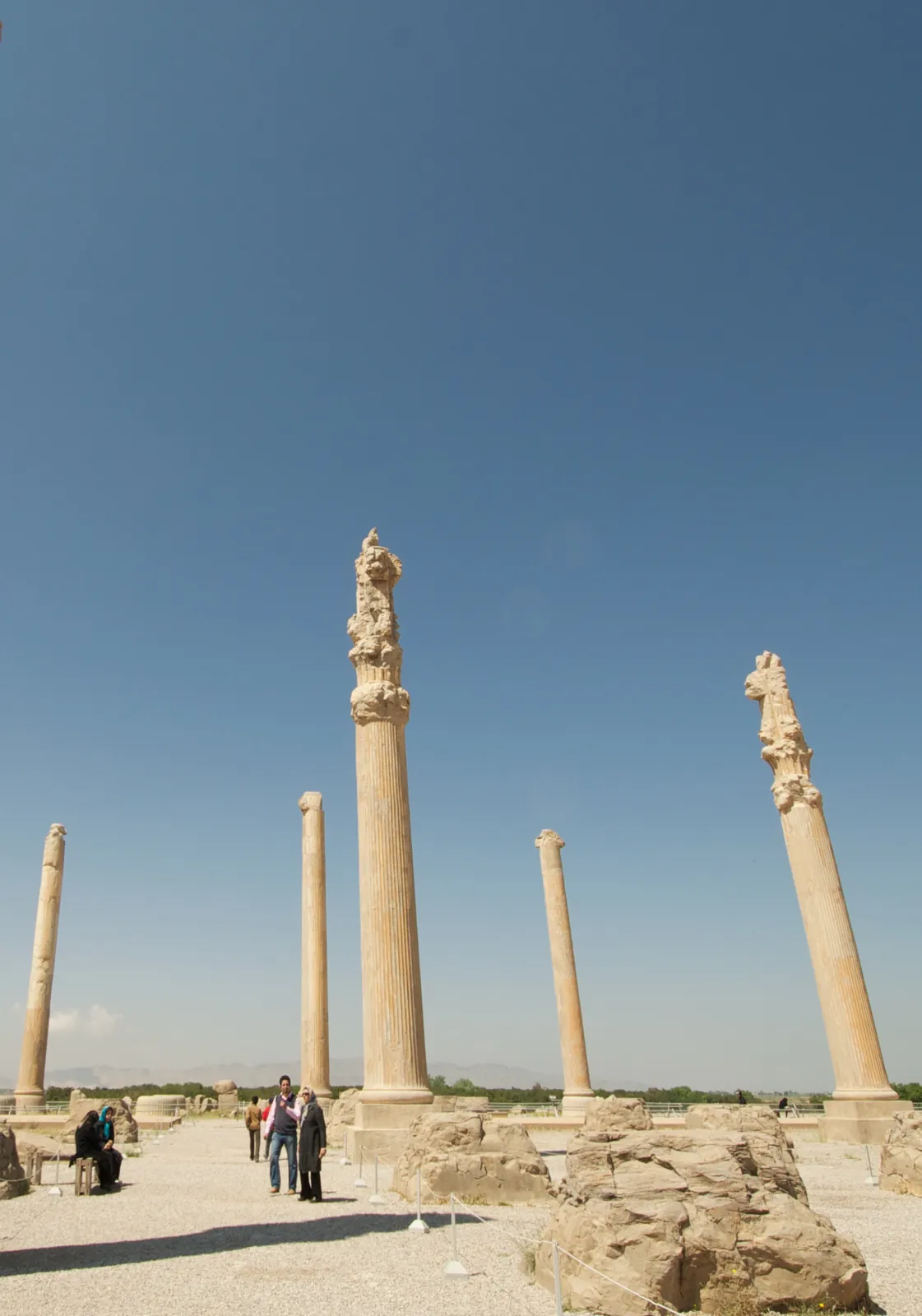
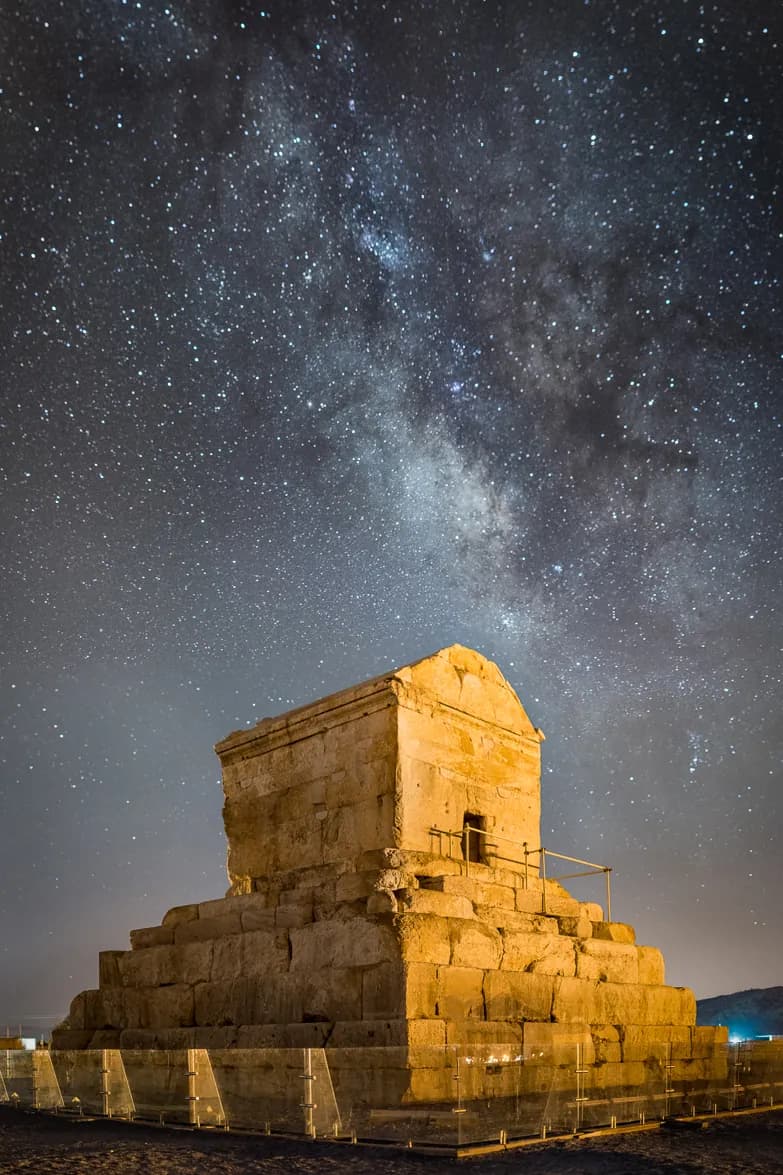
The Achaemenid architectural vocabulary is monumental, syncretic and explicitly imperial. The royal cities — Pasargadae under Cyrus, Susa under Darius, Persepolis under Darius and Xerxes — combine Median (column-and-portico), Elamite (palace-platform), Babylonian (relief decoration) and Egyptian (scale and stone-working) elements into a unified imperial style. The Apadana audience hall at Persepolis — built by Darius I and completed by Xerxes I, with thirty-six columns forty feet high — was the largest single building in the ancient world before the Roman imperial period. The reliefs on its eastern stairway are the most considered single visual statement of an imperial order that the Achaemenid period produced.
The buildings carried multilingual inscriptions in Old Persian, Elamite and Akkadian cuneiform — the imperial state was explicit in its plurality of subject peoples and its singularity of authority.
Decline and continuity
The Achaemenid empire ended quickly. Alexander's invasion of 334 BCE reached Persepolis by January 330; the city was deliberately burned (whether as a calculated political act against the Achaemenid centre or as a drunken impulse, ancient sources disagree); Darius III was murdered later that year by his own satrap Bessus; the dynasty ended. Alexander's Macedonian successors — the Seleucids — inherited the empire's administrative apparatus and ran it for the next century and a half before losing the Iranian heartland to the Parthians (Arsacids, c. 247 BCE) and, in the third century CE, to the Sasanians.
The Iranian civilization continued. The Parthian and Sasanian empires that succeeded the Achaemenids inherited and elaborated the imperial form, the Zoroastrian religion, the administrative practices, and the architectural vocabulary. The Achaemenid–Sasanian continuity is the working substrate of Iranian self-understanding into late antiquity; the Islamic conquests of the seventh century reframed it again without ending it.
Why the platform reads Persia
The platform reads Persia carefully because it is the durable imperial counterpoint to the Greek and Roman civic experiments. The question of how a continental-scale political order can be held together, what its administrative substrate has to look like, and what its visible form communicates is one the Achaemenid case answers more sharply than any other ancient civilization. The Greek tradition's reading of Persia — most elaborately in Xenophon's Cyropaedia — is itself one of the European tradition's founding reflections on imperial order, and the platform reads it as such.