A commemorative arch is a gateway with nothing to close and no wall to pierce. Its purpose is to be read: a large inscription across the attic naming the honorand and the occasion, and relief panels carrying the narrative.
The Arch of Titus is the best case for what the reliefs can do. Its inner panels show the triumphal procession after the Jewish War, including the menorah and the sacred vessels being carried from the Temple in Jerusalem — a Roman monument that is also a primary source for an object it destroyed the context of.
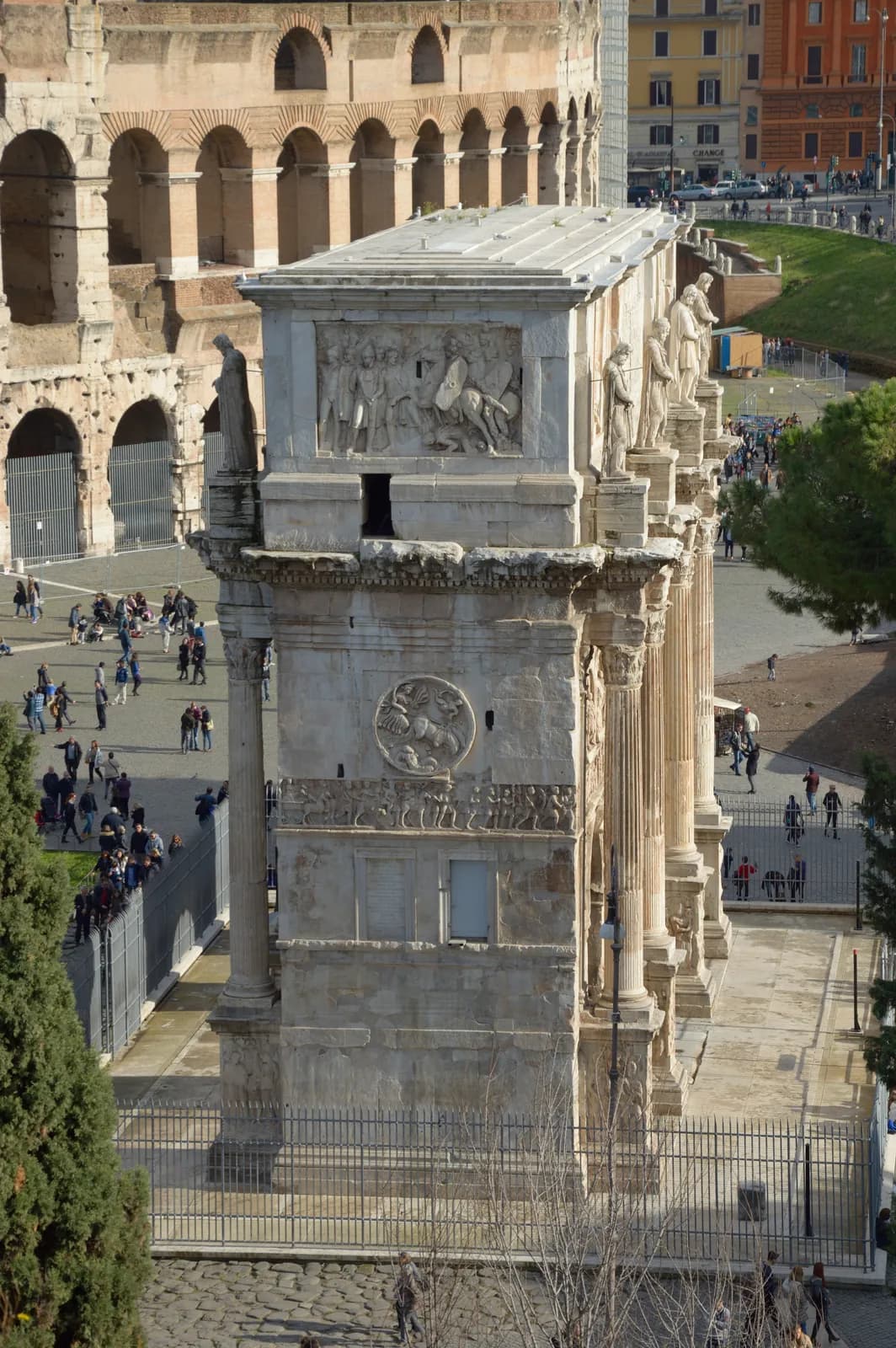
The Arch of Constantine is the other kind of case. Much of its sculpture is reused from monuments of Trajan, Hadrian and Marcus Aurelius, with the earlier emperors' heads recut. Whether that indicates decline in workshop capacity or a deliberate claim to stand in a line of good emperors is argued, and both readings have support.
What the evidence supports
The Arch of Titus reliefs depict the spoils of the Jerusalem Temple.
The menorah and the table are shown being carried in the triumph, and the panel is the principal visual evidence for their appearance.
The Arch of Constantine reuses earlier sculpture.
The reused panels are identifiable by style and by the recut portrait heads. The fact is not disputed.
Why Constantine's arch reuses sculpture is disputed.
Readings range from a decline in available craftsmanship to a deliberate association with the second-century 'good emperors'. The evidence supports both and settles neither.
Examples
The evidence level on each answers how we know what the building looked like, not whether it existed.
- Evidence level: Documented
Rome · After 81 CE
The Arch of Titus
Single-bay arch on the Via Sacra, heavily restored in the nineteenth century — the restored portions are deliberately left plainer so they can be distinguished. Standing on the Via Sacra.
- Evidence level: Documented
Rome · Dedicated 315 CE
The Arch of Constantine
Triple-bay, beside the Colosseum, incorporating sculpture from at least three earlier monuments. Standing complete beside the Colosseum.
Primary sources
Josephus, The Jewish War 7.123-157
The triumph of 71 CE and the spoils carried in it, described by a writer from the defeated side who was in Rome at the time, though he does not say he watched the procession.
How to read the evidence labels
- Evidence level: Documented
- Supported by a named primary text or by excavated material evidence.
- Evidence level: Probable
- Supported by strong inference that most specialists accept.
- Evidence level: Disputed
- Substantial specialist disagreement exists; competing readings are stated.
- Evidence level: Literary
- Belongs to poetic or mythological construction rather than to history.
- Evidence level: Mythological
- Belongs to shared religious or mythic tradition rather than to any single text.
- Evidence level: Unknown
- The available evidence is insufficient to decide.
These labels describe the status of the evidence, not our confidence in a conclusion. A claim marked Literary is not a claim we doubt; it is a claim about what kind of thing a poem is.