Ancient object
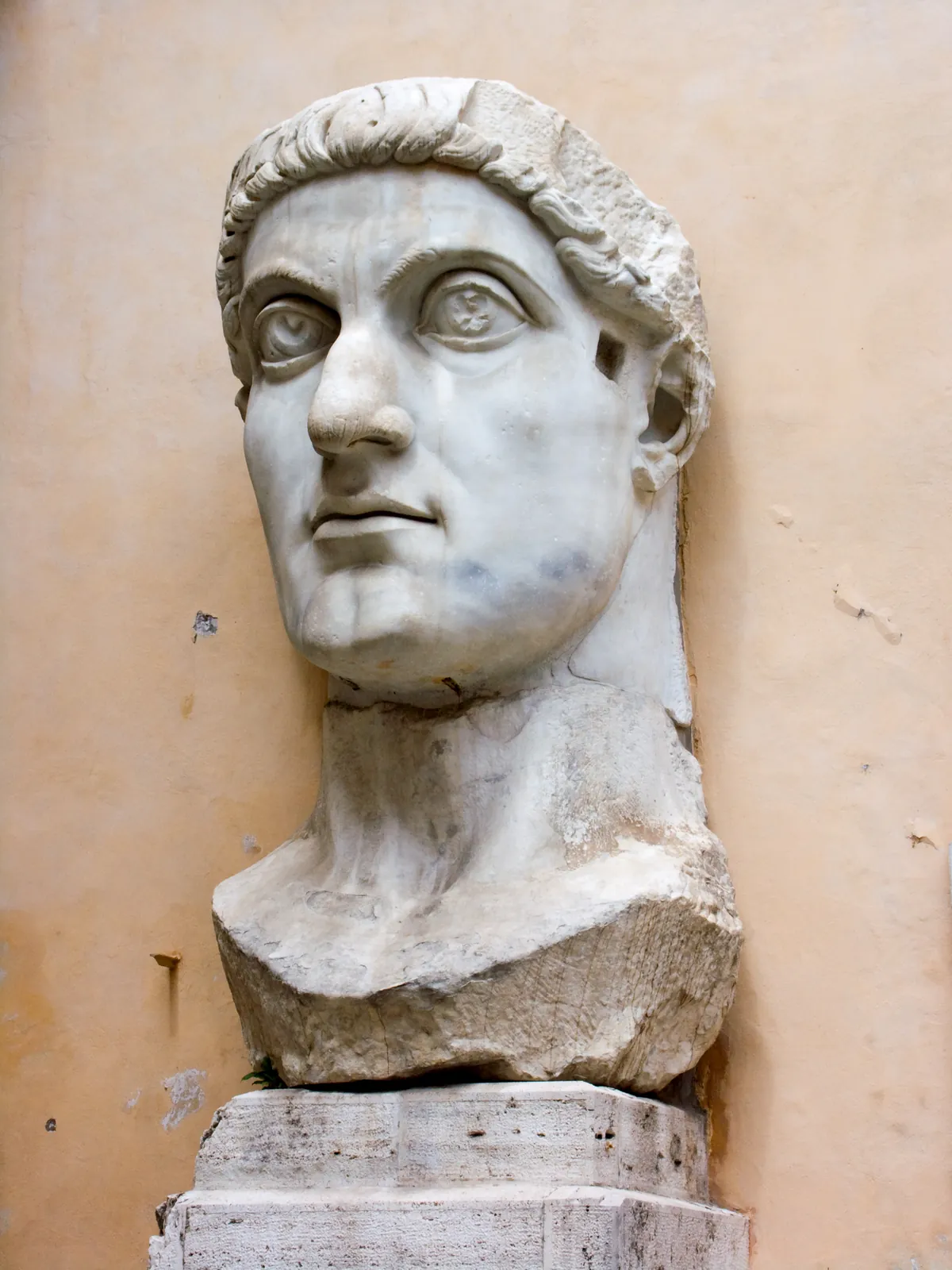
Fragments of the colossal seated statue of Constantine
Colossal acrolithic statue, surviving as nine marble fragments
Capitoline Museums, Rome
Object provenance
Record checked- Object
- Colossal acrolithic statue, surviving as nine marble fragments
- Material
- Parian marble for the exposed flesh; the body was of other materials over a frame
- Dimensions
- The complete statue is estimated at roughly 12 to 13 metres seated
- Made
- Evidence level: ProbableEarly 4th century CE
- Found
- Evidence level: DocumentedThe western apse of the Basilica of Maxentius, on the Via Sacra, Rome
- Excavated
- 1486
- Now at
- Capitoline Museums, Rome
- Inventory
- Not recorded in this catalogue
- Identification
- Evidence level: ProbableConstantine I
The fragments were attributed to Commodus on discovery and were only reassigned to Constantine at the end of the nineteenth century — four centuries after they came out of the ground. This is the platform's clearest case of an identification that took centuries to settle, and of how long a confident label can persist.
Condition — Nine fragments of an acrolithic figure. The remainder of the statue, which used a frame with gilded bronze and other materials, does not survive.
Read across
How to read the evidence labels
- Evidence level: Documented
- Supported by a named primary text or by excavated material evidence.
- Evidence level: Probable
- Supported by strong inference that most specialists accept.
- Evidence level: Disputed
- Substantial specialist disagreement exists; competing readings are stated.
- Evidence level: Literary
- Belongs to poetic or mythological construction rather than to history.
- Evidence level: Mythological
- Belongs to shared religious or mythic tradition rather than to any single text.
- Evidence level: Unknown
- The available evidence is insufficient to decide.
These labels describe the status of the evidence, not our confidence in a conclusion. A claim marked Literary is not a claim we doubt; it is a claim about what kind of thing a poem is.