Ancient object
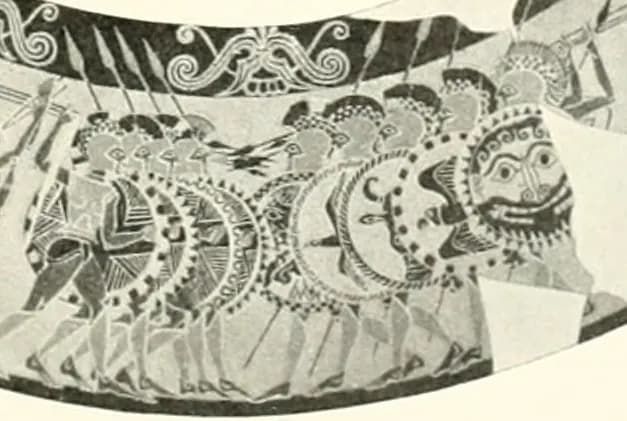
The Chigi vase
Proto-Corinthian olpe
Museo Nazionale Etrusco di Villa Giulia, Rome
Object provenance
Record incomplete- Object
- Proto-Corinthian olpe
- Material
- Painted ceramic
- Made
- Evidence level: Probablec. 640 BCE
- Found
- Evidence level: DocumentedAn Etruscan tomb at Monte Aguzzo, near Veii
- Excavated
- 1881
- Inventory
- Not recorded in this catalogue
- Identification
- Evidence level: DisputedThe earliest clear depiction of hoplites in close order
The frieze is universally cited as evidence for early hoplite formation. Whether it depicts a formation deploying for battle, a procession, or a poetic construction is argued, and it should not be used as a photograph of archaic warfare.
Not recorded here
- Inventory number
- Dimensions
Read across
How to read the evidence labels
- Evidence level: Documented
- Supported by a named primary text or by excavated material evidence.
- Evidence level: Probable
- Supported by strong inference that most specialists accept.
- Evidence level: Disputed
- Substantial specialist disagreement exists; competing readings are stated.
- Evidence level: Literary
- Belongs to poetic or mythological construction rather than to history.
- Evidence level: Mythological
- Belongs to shared religious or mythic tradition rather than to any single text.
- Evidence level: Unknown
- The available evidence is insufficient to decide.
These labels describe the status of the evidence, not our confidence in a conclusion. A claim marked Literary is not a claim we doubt; it is a claim about what kind of thing a poem is.