This page is about Rome as a civilization — the Republic, the Principate and the empire as political orders. For the city itself, its plan, its monuments, its water and grain supply and its archaeology, see Rome, the ancient city.
How the civilization read itself
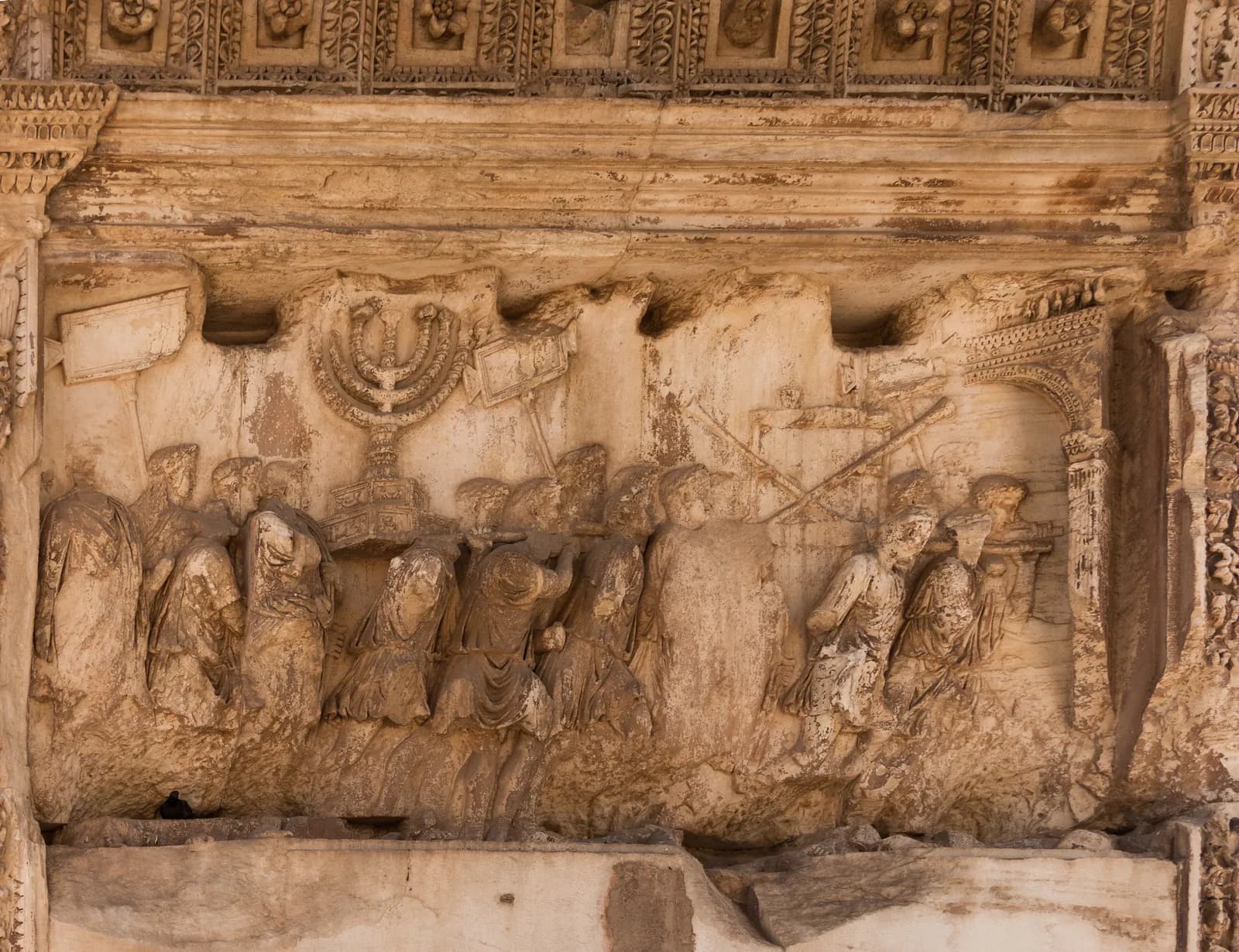
Rome read itself through its own past. The Romans wrote more history about themselves, more closely, more morally and across a longer span than any other ancient people. Mos maiorum — the ancestral custom — was not metaphor; it was an unwritten constitutional force. The funeral procession with the ancestral masks (imagines), the formal laudatio funebris, the generation-by-generation catalogue of magistracies in the senatorial families, the inscriptions on triumphal monuments — each was a working instrument of public memory. The civilization took itself to be the cumulative weight of what its citizens remembered about it and acted on.
Political structure
Roman political life ran on a tension between two facts. The res publica, the public thing, was the people's affair — authority derived from the citizen body; magistracies rotated; collegiality, annual tenure and the provocatio against arbitrary magisterial action distributed power across the constitution. Polybius, the Greek hostage whose seventeen years in the Scipionic circle made him the first careful analyst of the Roman system, read it as a mixed constitution in which consular (monarchic), senatorial (aristocratic) and assembly (democratic) elements checked one another. That is the form most European political thought would inherit.
The other fact is that this constitution was informal. Rome had no written constitution, no single charter, no judicial review. The system depended on the political class accepting the authority of mos maiorum as binding. Cicero's De Re Publica is the most sustained ancient defence of how that informal substance could hold, and the same author's De Officiis is the most sustained ancient statement of the personal disciplines the system required from its working senators.
The Republic ended not because its constitutional theory was refuted but because its political class stopped accepting the informal constraints the theory rested on. The Augustan settlement — read by Tacitus as the substitution of the form of self-government for its substance — replaced the Republic with the Principate while keeping the magistracies, the senate, the assemblies and the constitutional vocabulary intact. The European republican tradition has not stopped reading the transition.
Military structure
The Roman army before Marius was a citizen militia raised by property qualification — a man served because he owned enough land to be liable for service and he expected to return to that land. The Marian reforms of the late second century BCE replaced the property qualification with the capite censi — the propertyless — and tied the legionary's post-service security to his commander's political reach. The cumulative effect, across three generations, was that the armies of Rome stopped belonging to the city and started belonging to their generals. Sulla, Pompey, Caesar and Augustus each in turn drew the obvious political conclusion. The Principate inherited the professionalised legions and made them the standing instrument of the imperial state.
Under the high empire the army was a different kind of institution — disciplined, salaried, settled along the limites, recruited increasingly from the provinces, and structurally incapable of returning to its original civic role. The imperial peace it secured was real; the constitutional cost it imposed was also real; Tacitus's Annales hold the two together without flinching from either.
Architectural identity
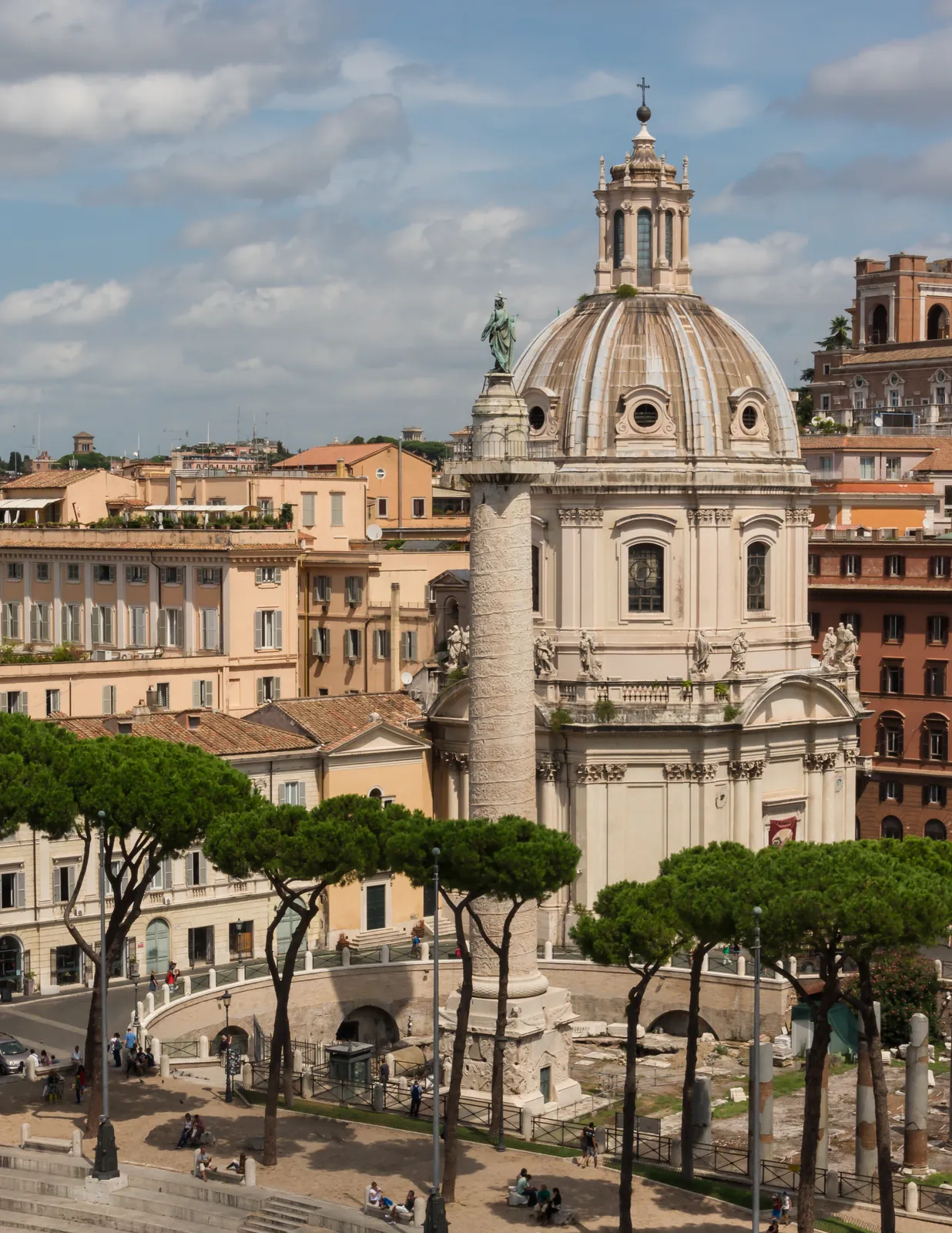
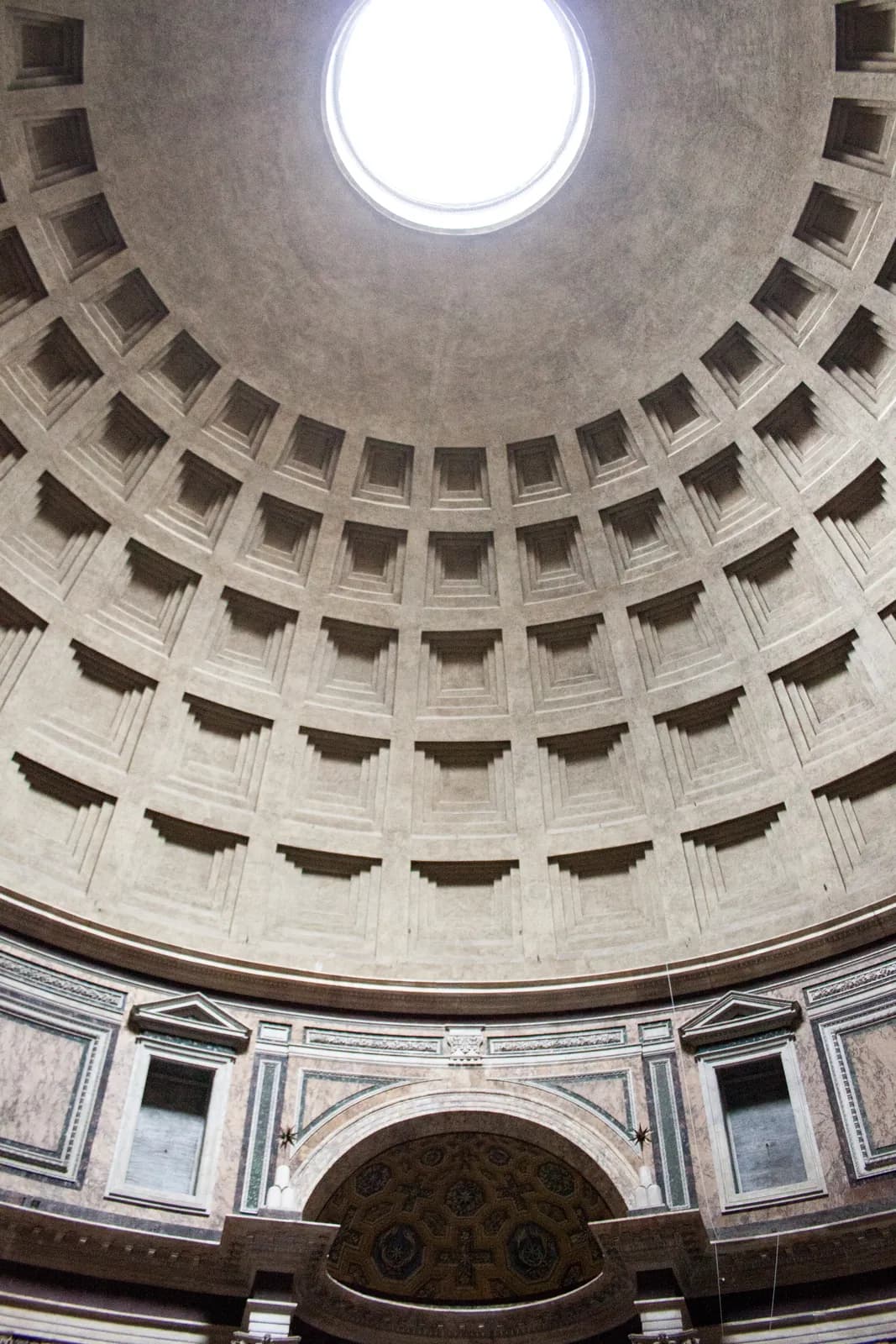
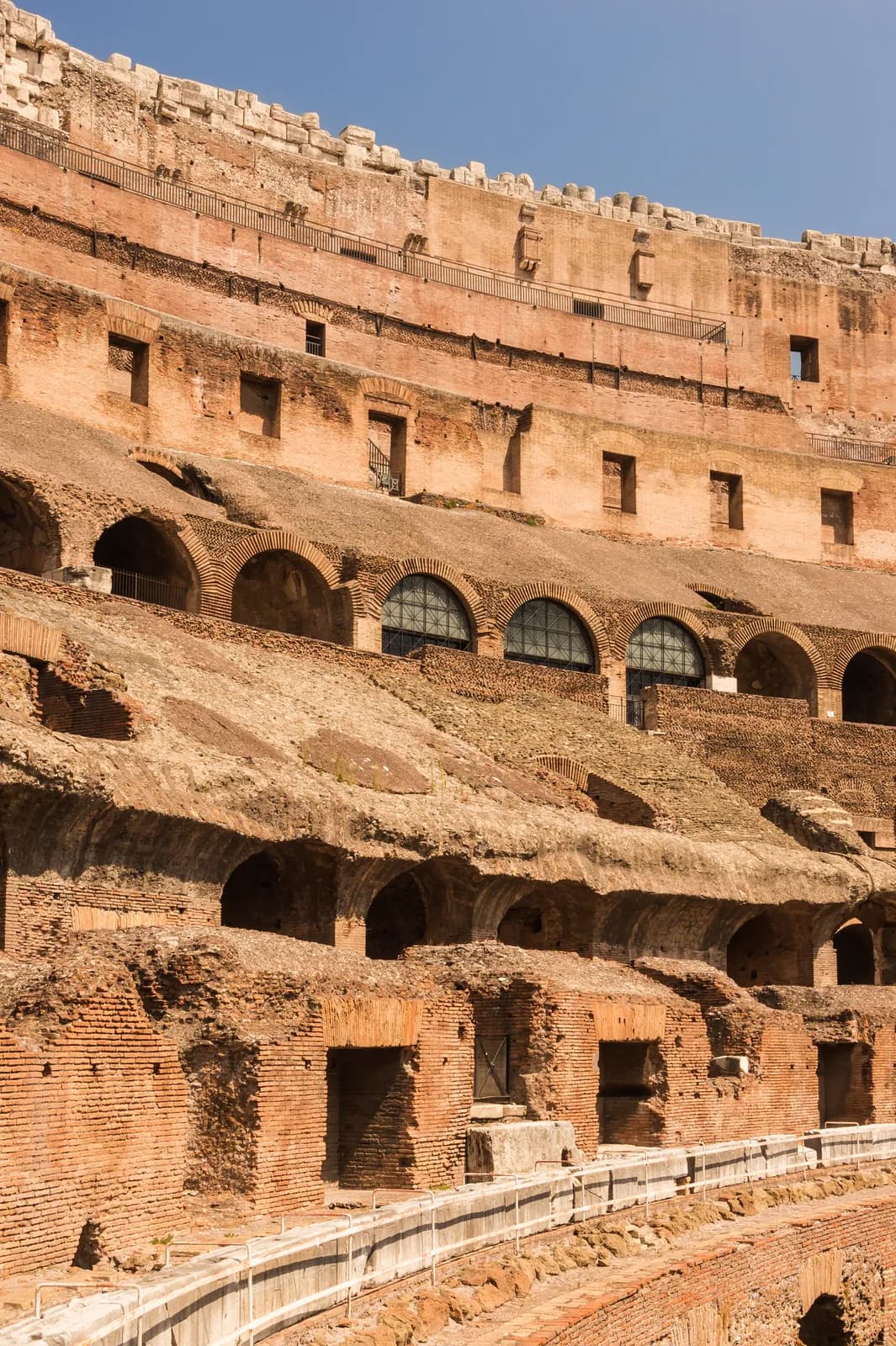
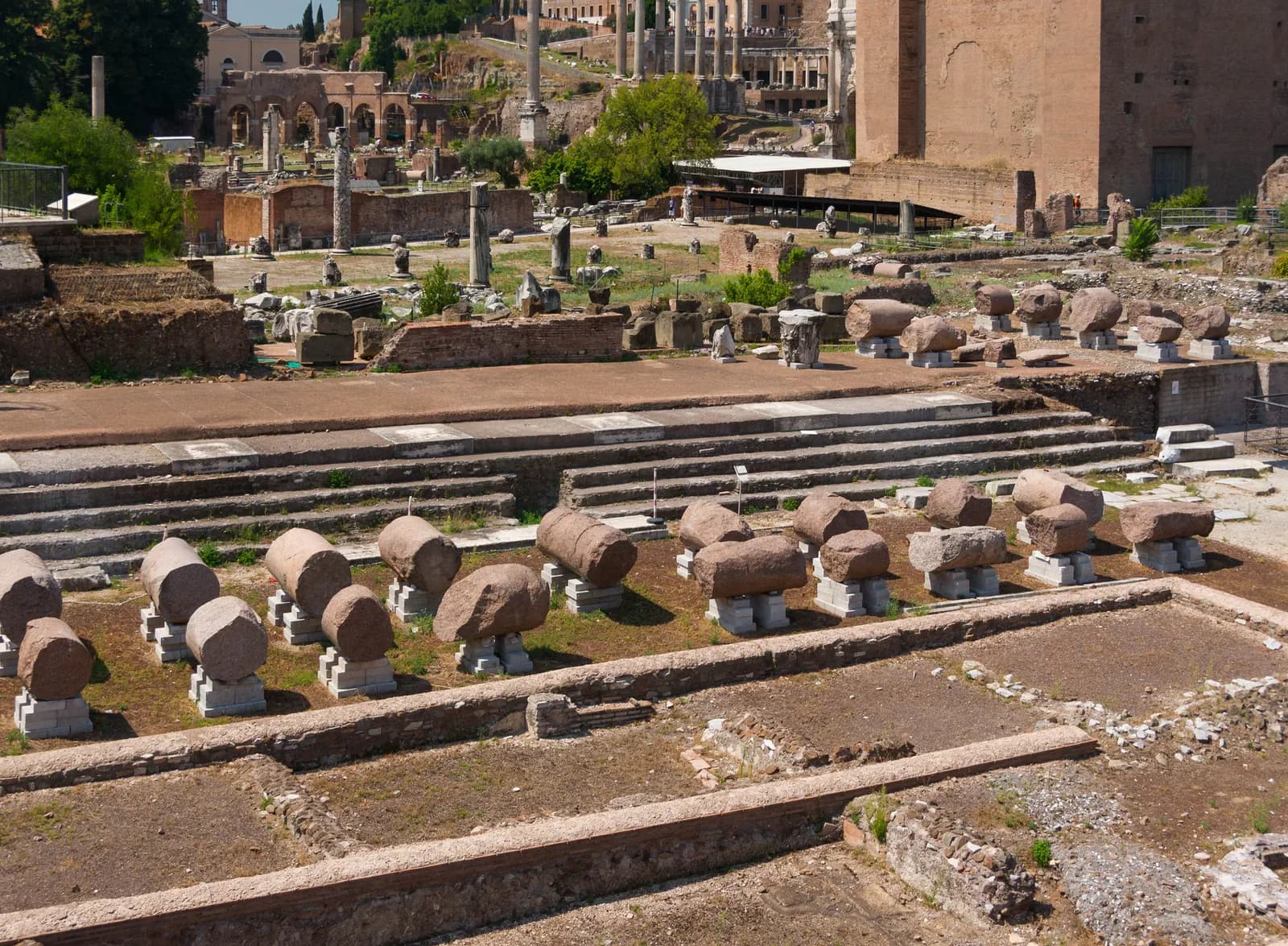
Rome's architectural vocabulary is the working form of its political life. The Forum was the Republic's civic centre — a working space for the courts, the senate, the popular assemblies, the funeral processions and the triumphs — and its physical fabric grew, basilica by basilica, with each generation's political settlement. The Augustan period began the systematic monumentalisation of the city as imperial centre: the Forum of Augustus, the Mausoleum, the Ara Pacis. The Flavian and Trajanic periods completed the form with the Colosseum, the Forum of Trajan, the Markets, and the spiral relief of Trajan's Column that became the most influential narrative monument of antiquity. The Pantheon under Hadrian is the surviving record of Roman concrete engineering at its full reach.
The Roman road network, the aqueducts, the harbours and the municipal forums and amphitheatres across the provinces were the imperial state in physical form — visible everywhere from Britain to Mesopotamia, and surviving in many cases as the foundations of medieval and early-modern European cities.
Decline and continuity
The Roman political order ended in stages over a long period — the third-century crisis under the soldier-emperors, the fourth-century Christianisation of the empire, the partition of east and west, the fifth-century arrivals of the Goths and the Vandals and the formal end of the western imperial line in 476. The platform reads the political end of Rome through the Tacitean lens: the substantive end is the Augustan settlement, and what comes after is the working of an empire that the Republican vocabulary no longer fits.
But the civilization did not end in 476, or in 235, or in 30 BCE. Latin remained the working language of European administration, law, scholarship and liturgy for a thousand years after the western political order was gone. Roman law — codified by Justinian in the sixth century — became the working legal substrate of medieval and early-modern Europe. The idea of Rome — imperium, res publica, senatus, consul, tribunus — was the political vocabulary the Carolingian, medieval and early-modern Europeans reached for whenever they needed to think seriously about constitutional life. The European republican tradition through the American founding is unintelligible without it.
Why the platform reads Rome
The platform reads Rome because its political life produced the longest sustained ancient case study of constitutional self-government — its working conditions, its erosion, its replacement by an order that preserved its forms — and because the moral and institutional vocabulary it left behind is the substrate of European political thought. The figures, books and essays grouped on this hub are the platform's working approach to that reading.