Parallel Lives
Parallel Lives
Plutarch's Parallel Lives — paired biographies of Greek and Roman statesmen, designed for comparison and for the study of character through what people did. The pairings, the method, and the long European afterlife of the most influential biographies ever written.
The Parallel Lives — Bíoi Parállēloi — are the work for which Plutarch is best known and the most influential biographies ever written: a sequence of lives of distinguished Greeks and Romans, arranged in pairs so that each Greek is set against a Roman of comparable career or character. The collection originally ran to twenty-four pairs; twenty-three survive, alongside four single Lives. Most pairs end with a short comparative essay, the synkrisis, that weighs the two figures directly against each other. The platform reads the Lives not as a shelf of separate biographies but as a single designed system.
What the Lives are doing
Plutarch tells us plainly that he writes lives, not histories. His subject is character, not the chronicle of events, and he will dwell on a small revealing incident and pass quickly over a great campaign, because — as he says at the opening of the Life of Alexander — “a slight thing like a phrase or a jest often makes a greater revelation of character than battles where thousands fall.” The Lives are works of moral biography: their purpose is to display character for the reader's instruction, and they assume an active reader who measures himself against the great men of the past and is formed by their company.
Why Plutarch pairs them
The pairing is not a literary ornament but a method of knowledge. By holding a Greek and a Roman of similar shape against each other, Plutarch isolates what is essential in each: where two men faced comparable situations and acted differently, the difference is the mark of individual character; where they acted alike, the likeness points to something in the role itself. The choice to pair across the two great cultures carries its own quiet argument — that Greek and Roman greatness are commensurable, that the virtues and vices of statesmanship are human rather than the property of one people, and that Plutarch's subjected Greece had produced men the equal of any Rome could show.
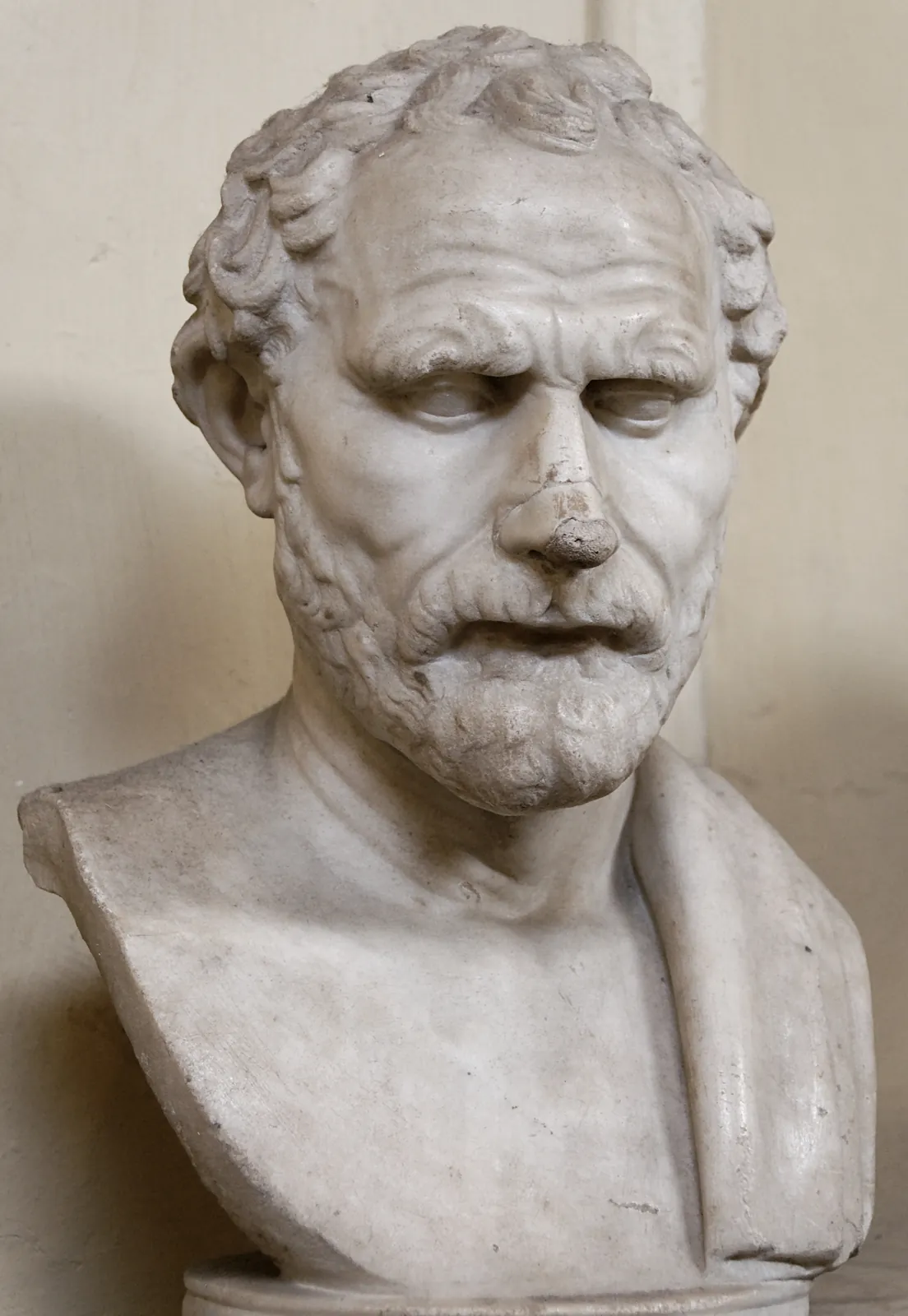
Demosthenes, paired with Cicero — the two supreme orator-statesmen of Greece and Rome.
The pairings
The platform carries each of Plutarch's principal pairings as a comparison page, reading why he joined them, where they converge and diverge, and the political and leadership lesson each draws:
- Alexander & Caesar — Supreme ability and unappeasable ambition.
- Pericles & Fabius Maximus — Steadiness and the courage of patience.
- Lycurgus & Numa — Two archaic founders — war and peace.
- Solon & Publicola — Founders who served the state, not mastered it.
- Demosthenes & Cicero — Eloquence in the last age of two free states.
- Alcibiades & Coriolanus — Great gifts turned against their cities.
- Agesilaus & Pompey — Beloved commanders, ruinous judgement.
- Nicias & Crassus — Wealth, bad judgement and lost armies.
The individual Lives
Several of the Lives are carried as primary-text entries in their own right, read for historical context, purpose, argument, influence and citation discipline: the Life of Alexander with its famous manifesto preface, the Life of Caesar, the Life of Pericles, the Life of Lycurgus, the Life of Solon, the Life of Cicero, and the Life of Cato the Younger. The collection as a whole is treated at Plutarch's Lives.
The reading discipline
The platform reads the Lives with the care their nature requires. Plutarch wrote centuries after most of his subjects, drawing on earlier sources now lost; he prized character over chronology and would keep a revealing anecdote of doubtful historicity. He is, in the platform's reading, a witness to the traditions about his figures and to his own moral vision more than to bare events — to be read for the study of character under power while keeping the historian's caution about his facts. No quotation is invented and no citation fabricated; the Lives are cited by chapter, the standard scholarly editions named on the Sources page.
The long afterlife
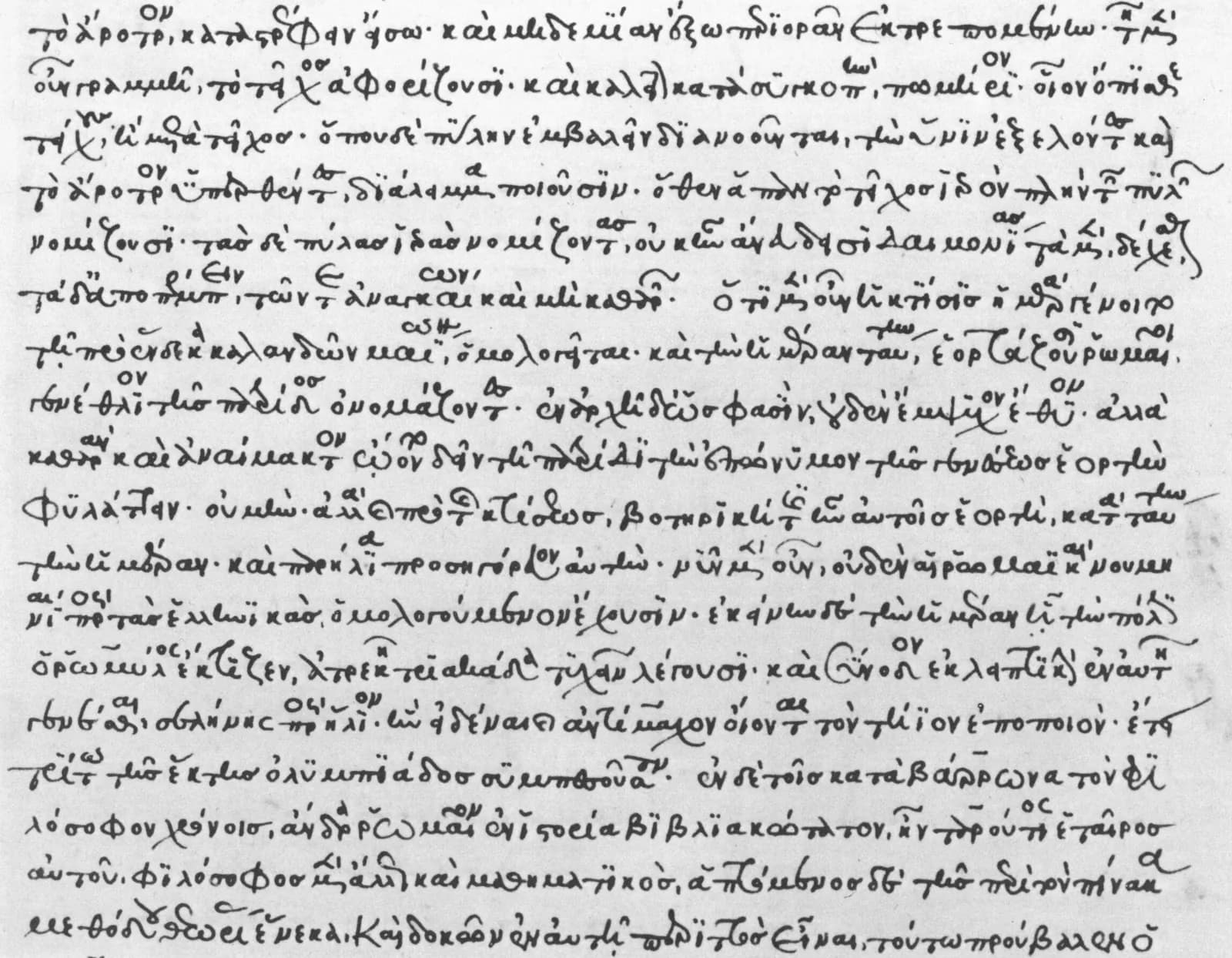
The survival of the Lives depended on centuries of Byzantine copying — the manuscript above is one such witness — and their influence, once recovered, was immense. Through Sir Thomas North's 1579 English translation they gave Shakespeare his Roman plays; through countless editions they schooled the Renaissance courts, the English commonwealth writers, and the leaders of the French and American revolutions in the conduct of public life. The platform reads the Parallel Lives as one of the defining intellectual pillars of the European tradition — and the reason Plutarch belongs beside Greece, Rome and Persia among the civilizational hubs of this site. The case for his continuing importance is made in why Plutarch still matters.