The imperial pharaoh
The New Kingdom transformed Egypt from a self-contained Nile civilization into an empire — a warrior-monarchy ruling from the Euphrates to Nubia — and the platform reads Ramesses II as the figure who made himself its permanent image. Building on the conquests of Thutmose III, the true maker of the empire, Ramesses fused military power, religious authority and monumental self-commemoration into the most complete picture of sacred kingship that Egypt ever produced. To picture an imperial pharaoh is, very largely, to picture Ramesses.
Kadesh and the diplomacy of empire
The platform reads the battle of Kadesh against the Hittites as the defining episode of Ramesses' reign and a revealing study in royal legitimacy. Ramesses commemorated it everywhere as a personal triumph, the king single-handedly rallying his army from the brink of disaster — a magnificent piece of royal self-presentation for a battle that was, in fact, closer to a draw. The platform reads its true importance in the sequel: the treaty Ramesses concluded with the Hittites years later, the earliest surviving international peace treaty, was a mature recognition that the two great powers of the age could not destroy each other and must coexist. The platform reads this as the diplomacy of mature empire — the acknowledgment of limits that the propaganda of conquest concealed.
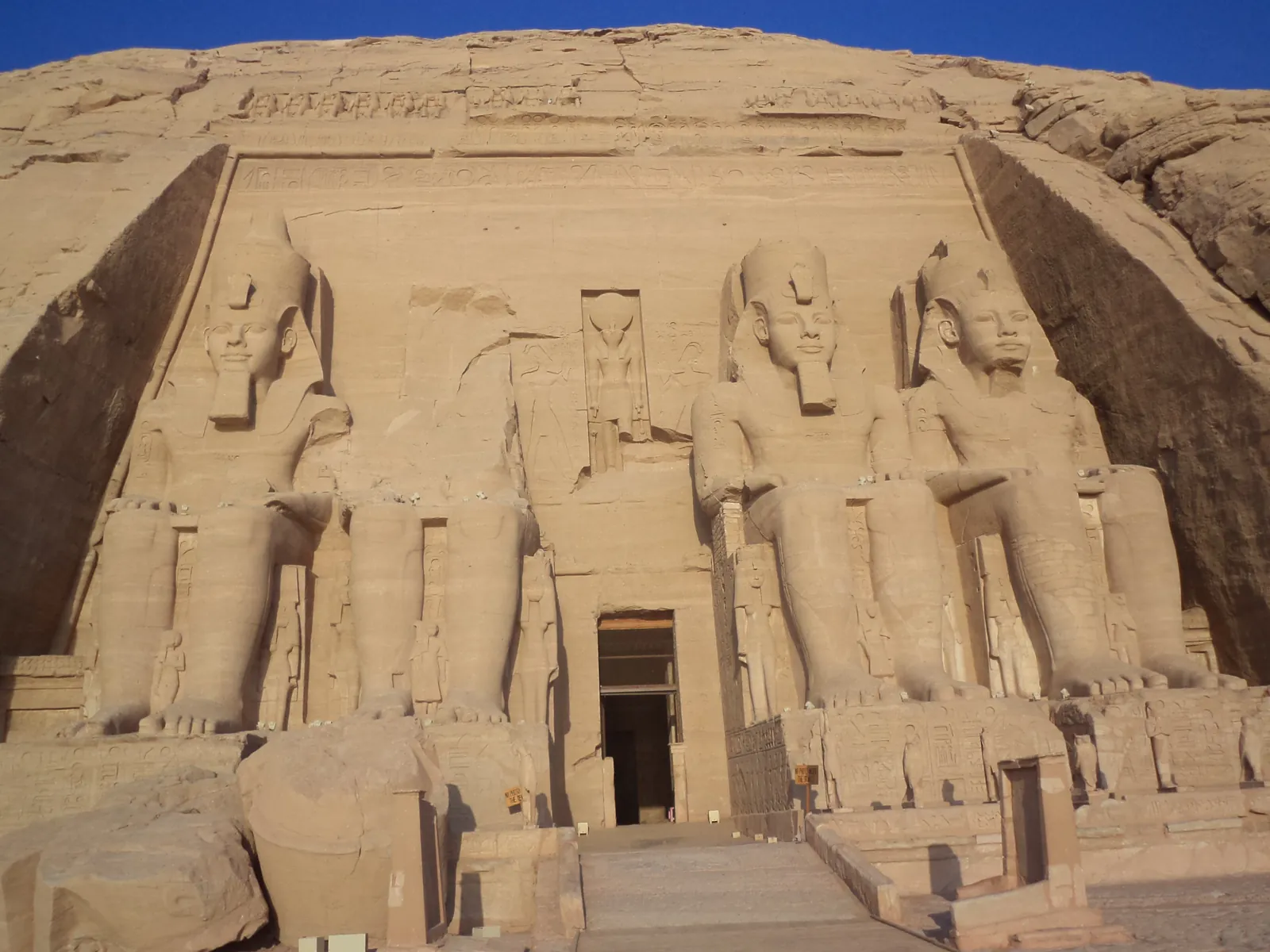
The Great Temple of Abu Simbel — four sixty-foot colossi of Ramesses cut from the cliff, monumentality as imperial power.
Monument as empire
The platform reads Ramesses' building program as the imperial monument at its zenith, the supreme expression of monumentality. He built the length of Egypt and Nubia, completed the great hypostyle hall at Karnak, raised the Ramesseum, and cut the colossal rock temples of Abu Simbel with their sixty-foot seated figures of himself. The platform reads this not as vanity merely but as a strategy of permanence: Ramesses understood that to carve his name and image everywhere was to defeat time and to make the empire's power visible at the scale of the landscape. He did it so thoroughly that the later world could hardly imagine a pharaoh who was not Ramesses.
Why the platform reads it
The platform reads Ramesses and imperial Egypt as the portrait of the New Kingdom at its height — the age in which Egypt was an empire and the pharaoh a warrior-god whose monuments still define the image of ancient kingship. It is the platform's central case of empire-building and monumentality in the Egyptian register, and the culmination of the imperial story the New Kingdom hub tells.