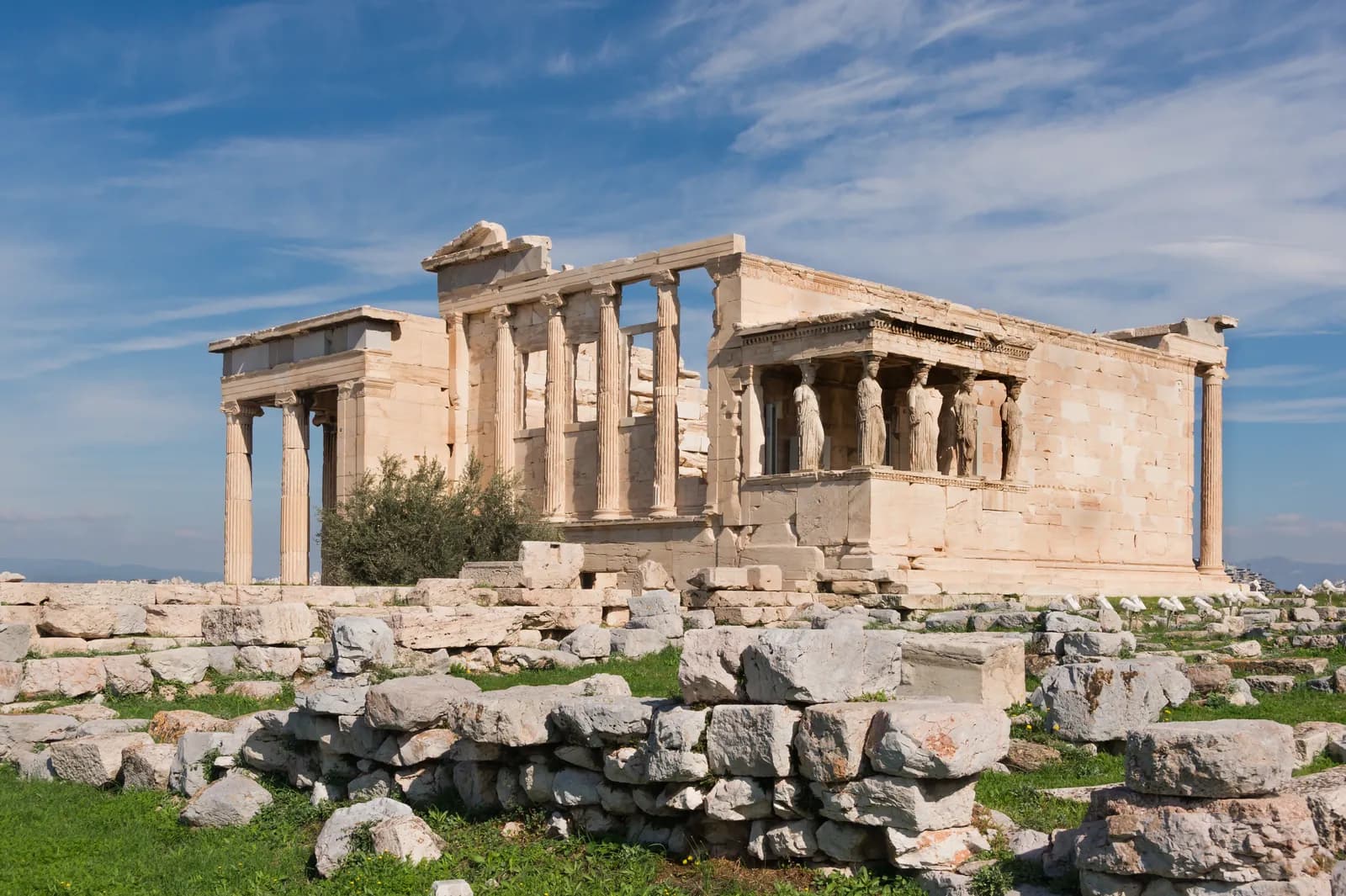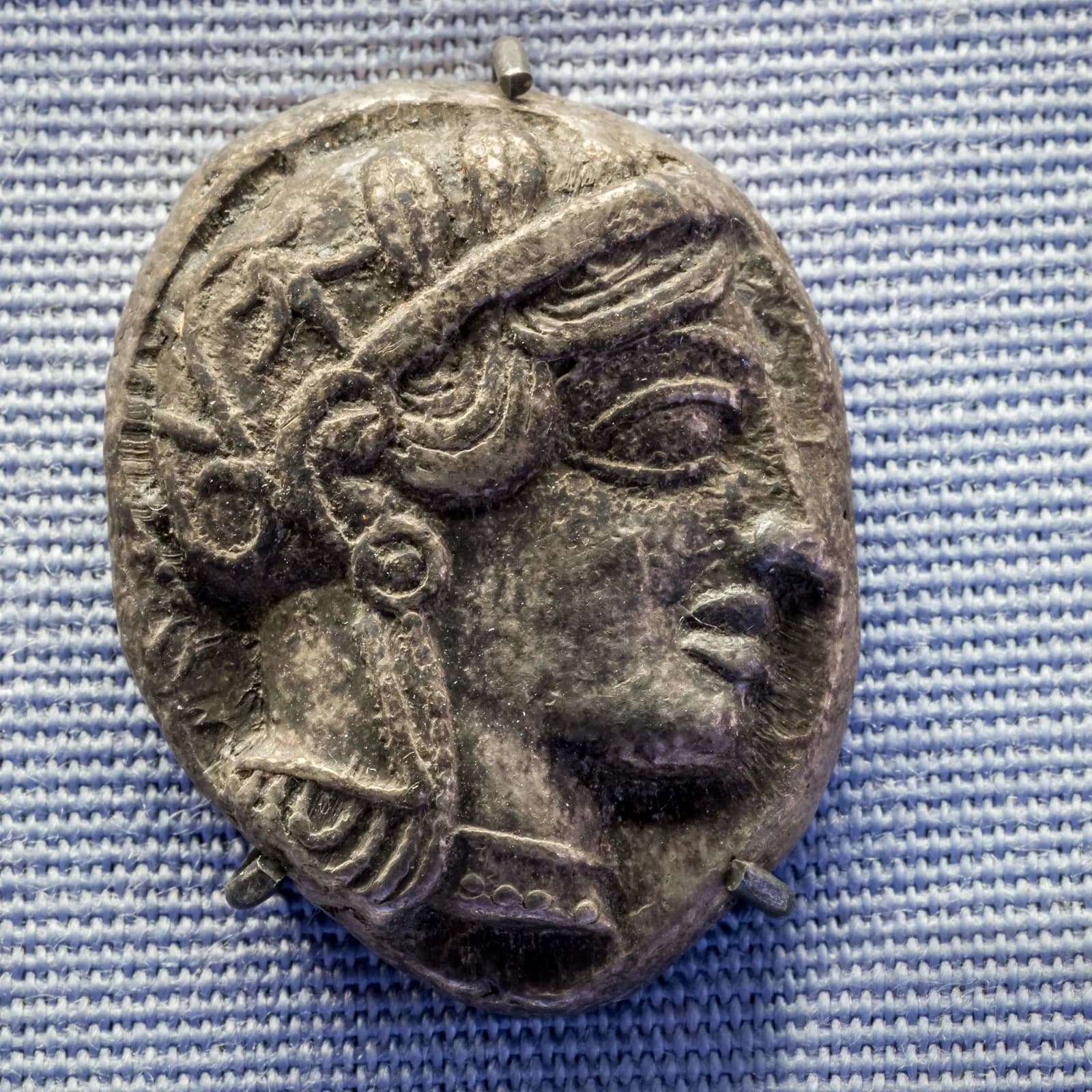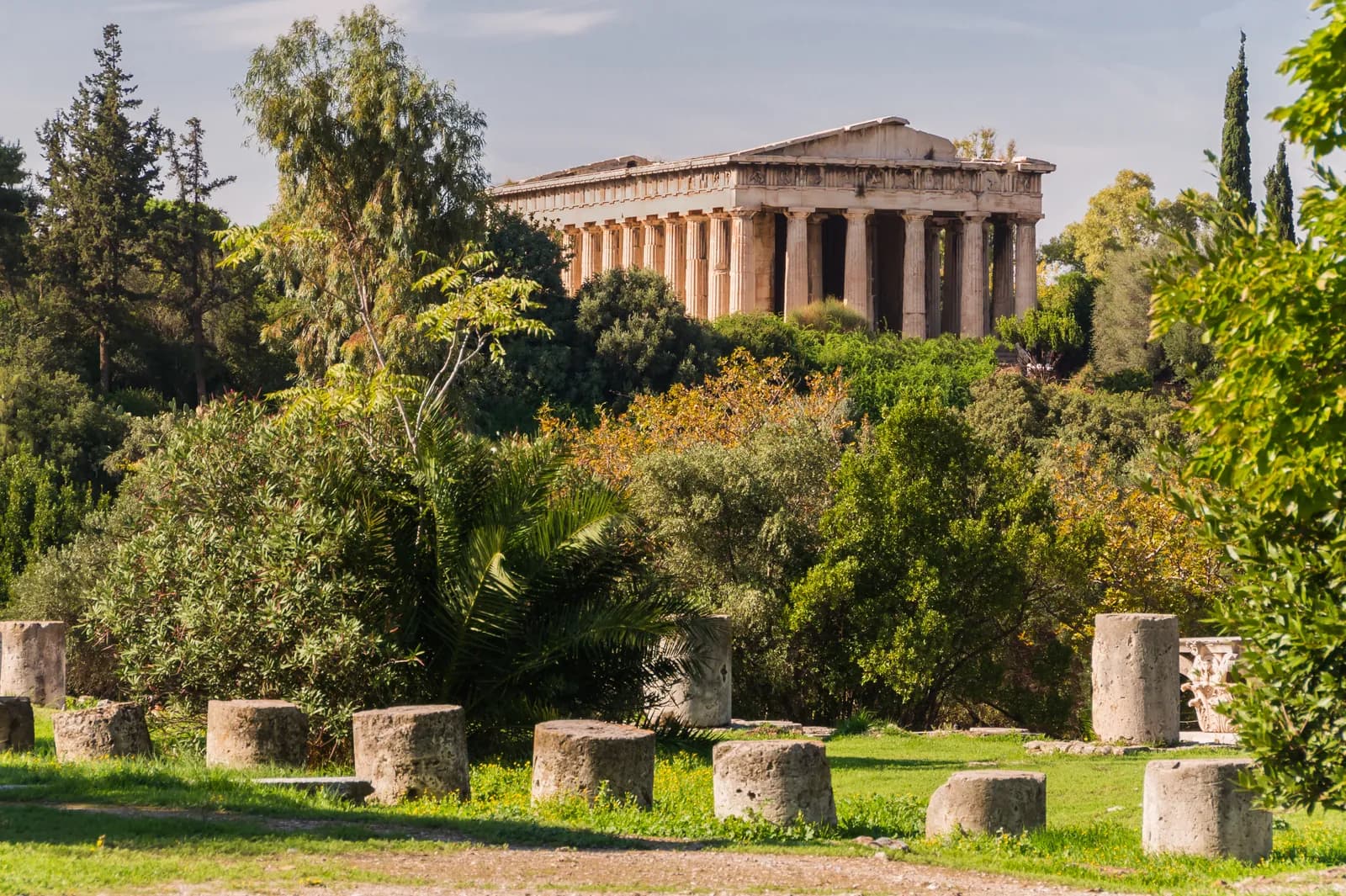
This page is about Athens as a political and cultural order. For the physical city — the Acropolis, the Agora, the Long Walls, the excavations and the museums — see Athens, the ancient city.
How the polis read itself
Athens read itself, more than any other ancient polity, through public speech. Political life happened in the open — in the agora, in the assembly on the Pnyx, in the popular law-courts, in the dramatic festivals at the Theatre of Dionysus — and the citizen body's working self-understanding was the cumulative argument made by Athenians to other Athenians about what the city was and what it should do. Pericles's Funeral Oration, as Thucydides reconstructs it in Book II of the Peloponnesian War, is the most considered surviving statement of this self-conception: a city that does not envy its citizens for being themselves, that conducts its affairs by argument and not by force, that educates by example rather than by drill.
The self-conception is partly programmatic. The Athens Thucydides recorded was not the working Athens of every year — the Peloponnesian War's later years break it, the Sicilian disaster breaks it, the two oligarchic interludes of 411 and 404 BCE break it, the execution of Socrates in 399 darkens it. But the working practice of self-justification in front of fellow citizens persisted for two centuries, and the literature it produced is the principal substrate of European political thought.
Political structure
The Athenian constitution is the most fully documented ancient democratic order. Solon's reforms in 594 BCE began the constitutional differentiation by census class; Cleisthenes in 508 BCE produced the working form by reorganising the citizen body into ten artificial phylai (tribes) drawn from ten regional trittyes across the Attic territory, and by making the Boulē of 500 the rotating preparatory body of the demos. The Ephialtic and Periclean reforms of the mid-fifth century completed the form: paid public service so that the working poor could participate, popular juries with authority over the magistrates, sortition (allotment) rather than election for most offices.
The institutional architecture had three principal organs. The Ekklēsia (assembly) — open to all adult male citizens — was the sovereign deliberative body, meeting on the Pnyx approximately forty times a year, with a working quorum of six thousand for major business. The Boulē (council) of 500 prepared the assembly's agenda and ran the day-to-day administration; its members were chosen by lot, served for one year, and could not serve twice consecutively. The popular dikastēria (law-courts) — juries of several hundred to several thousand citizens, chosen by lot — heard cases under direct democratic procedure. The strategic and financial magistracies that required expertise were elective (the stratēgoi, ten generals each year; the financial offices); the others were allotted.
Citizenship was restricted. Adult male citizens with two Athenian parents (after the Periclean citizenship law of 451 BCE) numbered approximately 30–60,000 across the fifth century out of a total Attic population of perhaps 250–300,000. Women, metics (resident foreigners), and slaves were not citizens. The platform reads Athenian democracy without flinching from this: the working democratic practice was real, the institutional sophistication was real, and the exclusionary working population on which it depended was also real. Both facts have to be carried together.
Military structure
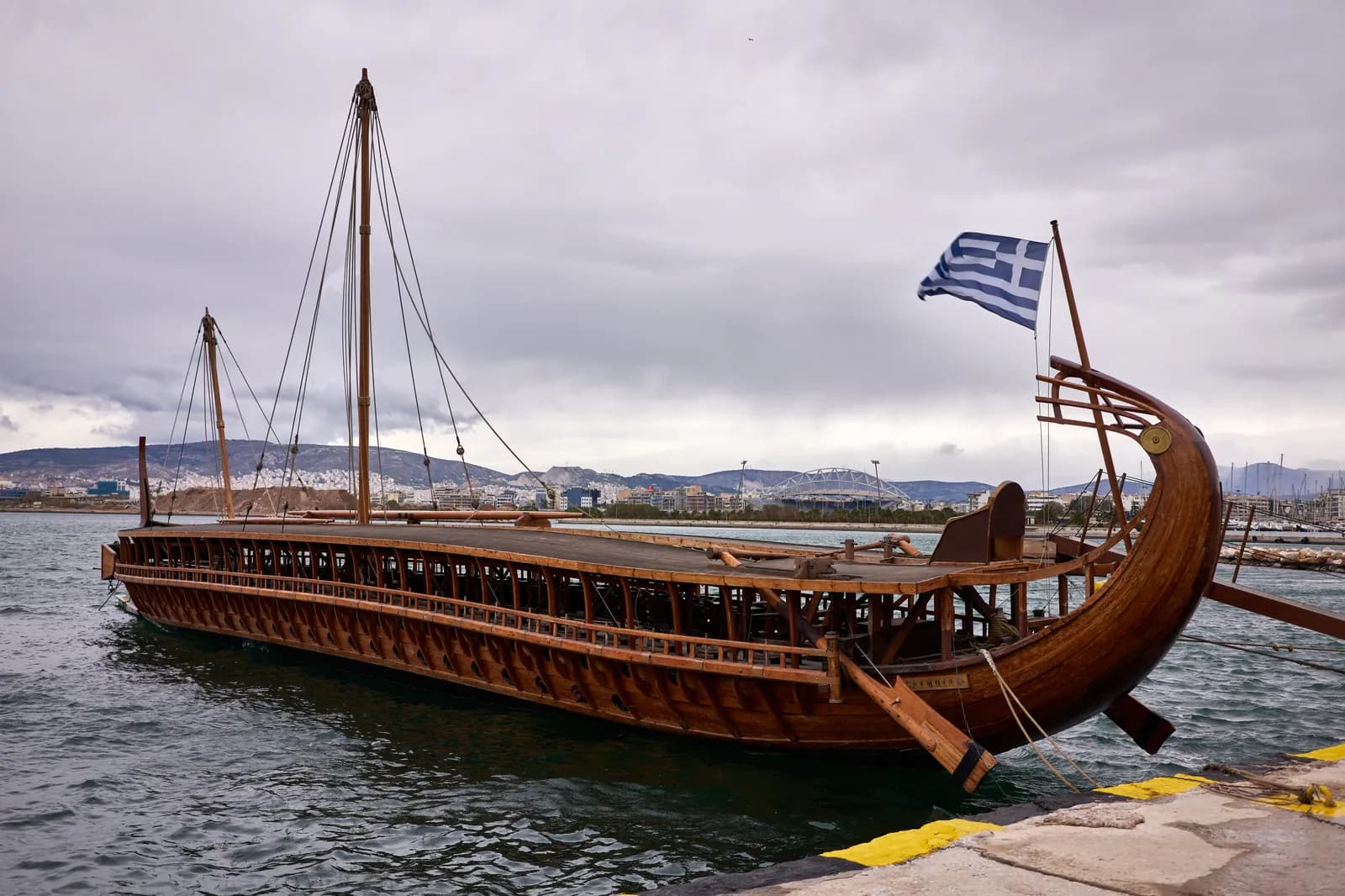
Athens was a naval power. The fifth-century Athenian navy — two hundred trireme galleys at its peak, manned by citizens, metics and thetes (the lowest census class, paid public oarsmen) — was the working instrument of the Delian League and the Aegean archē (empire) of the Periclean period. The thetes who served on the triremes had a working constitutional stake: the navy was the polity's military form, and the lowest census class was its primary manpower. Aristotle in Politics notes this connection explicitly — naval power and democratic constitution travel together.
The Athenian land army was hoplite — the citizen heavy infantry of the property-qualified census classes — supplemented by allied contingents and by light infantry and mercenaries in the later periods. The Athenian land force was competent but not the political form's principal instrument; the navy was.
The combination — democratic constitution, naval power, and archē over the Aegean — held for the first two-thirds of the fifth century BCE. The Peloponnesian War (431–404 BCE) broke it. The recovery after the war was real but partial; the fourth-century democratic Athens that produced Plato, Demosthenes, the orators and the late dramatic tradition worked under conditions of reduced empire and reduced strategic reach.
Philosophy and rhetoric
The fifth- and fourth-century Athenian intellectual culture produced the principal substrate of European philosophical and political thought. Socrates, Plato, Aristotle, Xenophon — the core philosophical tradition the platform reads — were all Athenians or worked at Athens. The sophistic tradition that predated and surrounded Socrates was concentrated at Athens because Athens was where political argument was being conducted in public on the largest scale, and the rhetorical training the sophists offered was the working instrument of that practice.
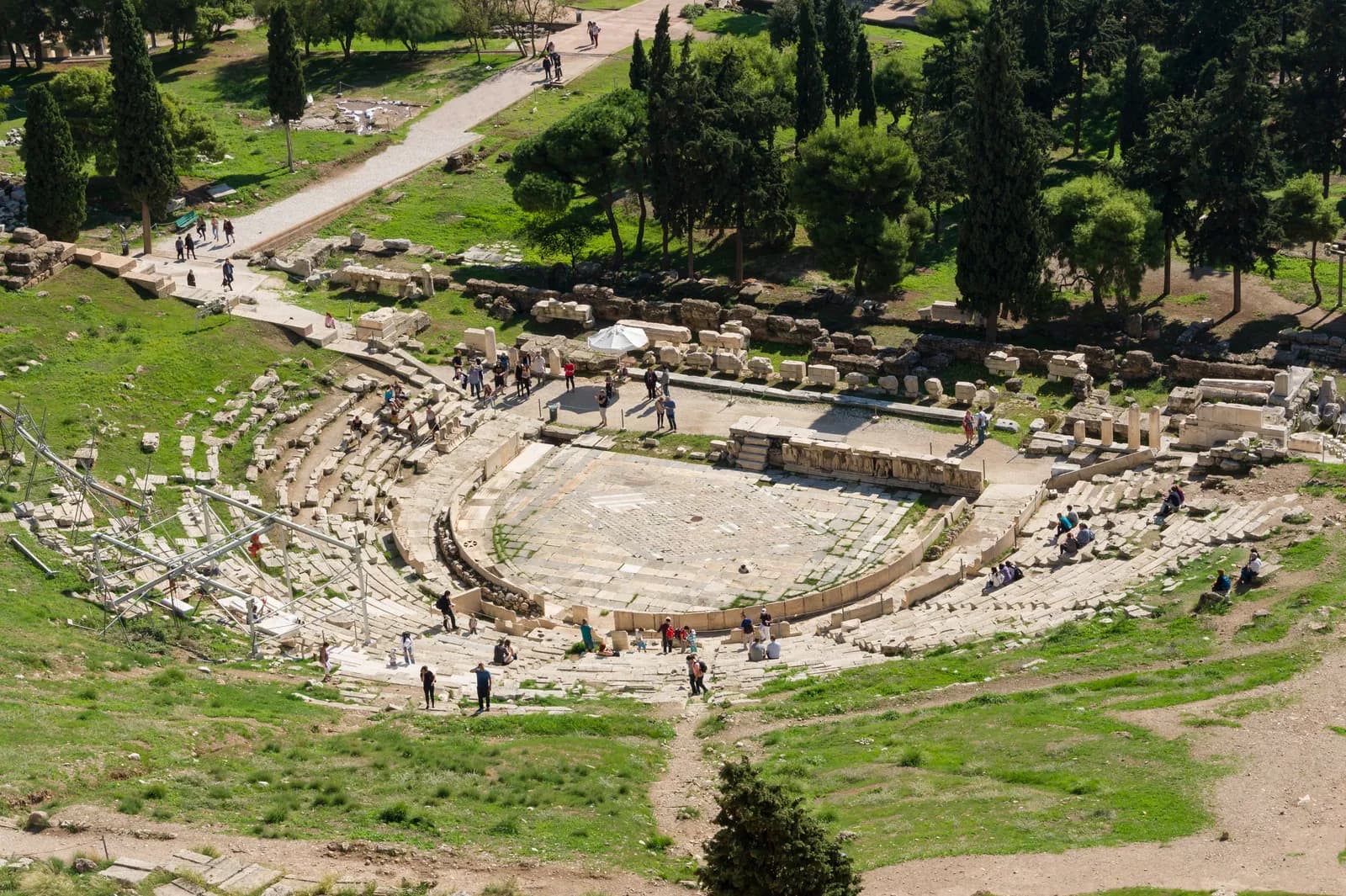
The dramatic tradition — Aeschylus, Sophocles, Euripides, Aristophanes — was a civic practice. The Theatre of Dionysus on the south slope of the Acropolis was a civic space; the festivals were funded by the state and by liturgies on wealthy citizens; the audience was the citizen body. Tragedy and comedy were the citizen body watching itself work through the moral and political conditions of its life, in front of itself.
The instability the form carried
The European tradition's reading of Athens has not been sentimental, on the whole, because the working sources are not sentimental. Thucydides's Peloponnesian War is the most considered ancient critique of democratic decision-making under wartime stress (the Mytilenean debate, the Melian dialogue, the Sicilian expedition); Aristophanes's comedies are the working contemporary critique from inside the city; Plato's Apology and Crito are the working critique of the polity that condemned Socrates; Aristotle's Politics reads Athenian democracy as one constitutional form among several, with its characteristic decays and its characteristic strengths.
The simplistic reading — that Athens was good because it was democratic, and that everything democratic is good because Athens was — was not the ancient view and is not the platform's view. The careful reading is that Athens produced the most considered working ancient experiment in self-government, that the experiment achieved things no other ancient polity achieved, and that the experiment had specific structural vulnerabilities and specific exclusionary working conditions that the European tradition has continued to read for two and a half thousand years.
Why the platform reads Athens densely
Athens is the densest single node in the platform's civilization graph because the working substrate of European political thought is unintelligible without it. The constitutional vocabulary, the practice of public argument, the philosophical examination of the well-ordered life, the historiographical practice of pragmatic causal analysis, the dramatic representation of civic and ethical conflict — each is a working ancient invention that the European tradition has continued to use, and each is concentrated at Athens. The platform reads Athens carefully not because Athens is the answer but because Athens is the place where so many of the questions were first formulated in the form the European tradition kept.